
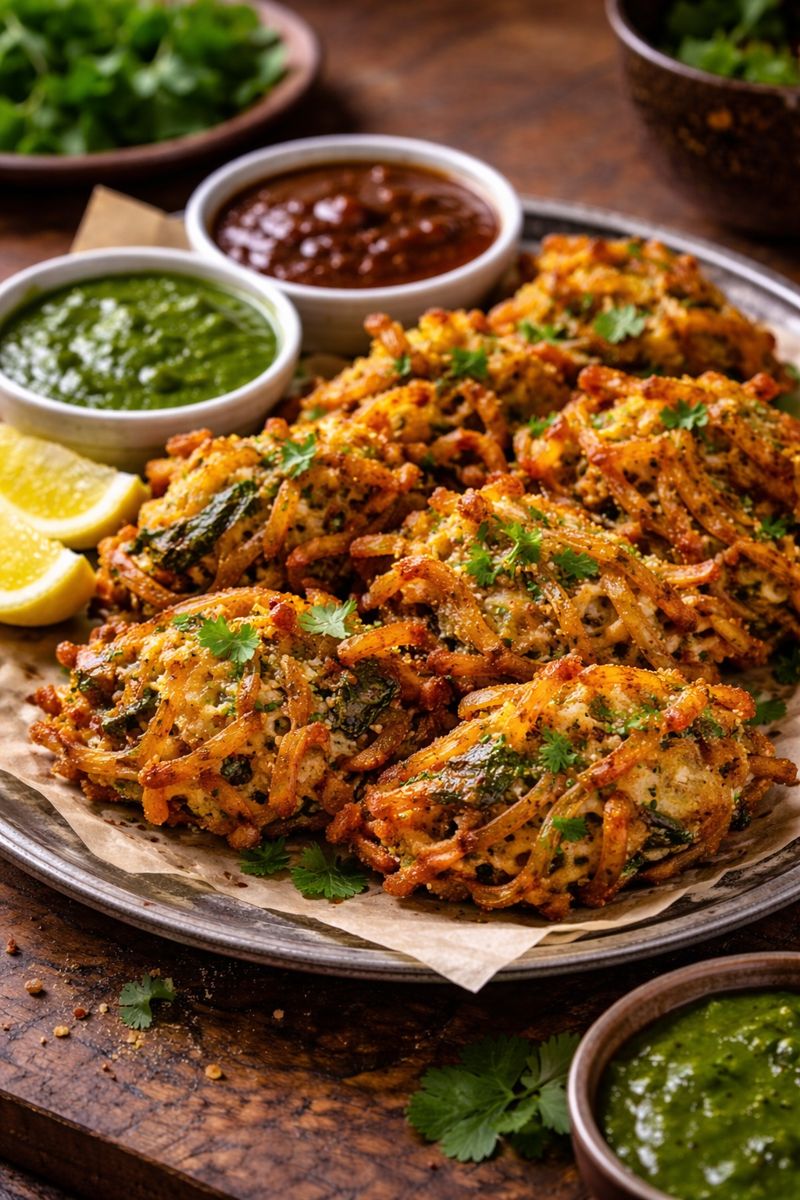
Why Homemade Pakoras Go Greasy (And How Restaurants Keep Them Light)
If your pakoras come out heavy, oily, or sit in a pool of grease, the problem isn’t the vegetables or spices. It’s how the batter and oil are being used. Pakoras should be light, crisp, and dry to the touch — not greasy. Here are the real reasons homemade pakoras go wrong, and how restaurants keep them light.
Quick Answer
Pakoras go greasy when the batter is too wet, the oil temperature is too low, or the pakoras are cooked too slowly. Restaurants use a thicker batter, fry at 170–180°C, and cook fast enough to set the crust before oil can soak in.
1) Your batter is too wet
A thin batter might look right, but it’s the main cause of greasy pakoras. Wet batter takes longer to set, which gives oil time to soak into the food instead of sealing it.
- Fix: use a thick batter that clings, not pours.
- Clue: if it drips off the veg easily, it’s too wet.
2) The oil temperature is too low
Oil that isn’t hot enough turns frying into soaking. Instead of crisping instantly, pakoras sit in the oil absorbing fat. This is the single biggest reason pakoras feel heavy.
- Target: 170–180°C.
- No thermometer? Batter should sizzle instantly and float.
3) You’re cooking too slowly
Pakoras need heat to work. Slow frying gives oil time to penetrate before the crust forms. Restaurants fry pakoras relatively quickly to lock in texture.
4) You’re overcrowding the pan
Adding too many pakoras at once drops the oil temperature instantly. Even good batter can’t compensate for cold oil.
5) Poor draining traps oil
Pakoras need to drain properly. Piling them up or serving straight from the fryer traps surface oil and steam.
- Mix a thick, clinging batter.
- Heat oil to 170–180°C.
- Fry in small batches.
- Cook until deep golden.
- Drain briefly before serving.
Home vs restaurant pakoras
| Aspect | Home method | Restaurant method |
|---|---|---|
| Batter | Thin | Thick, clinging |
| Oil heat | Too cool | 170–180°C |
| Frying | Slow | Fast, controlled |
| Result | Greasy | Light & crisp |
Want takeaway-style starters that actually work?
My books explain the cooking logic behind Indian restaurant food — not just recipes.
Summary
Greasy pakoras are caused by wet batter, cool oil, and slow frying. Thicken the batter, fry at the correct temperature, and work in small batches. Do that and pakoras become light, crisp, and properly fried — not oil-soaked.