What this hub covers
- Why curries taste flat, bitter, sweet or “samey”
- Base sauce explained (without hype)
- Spice timing: what goes in when (and why)
- Thickness, reduction and “takeaway gloss”
- Slow cooker fixes that actually work

Author Carl – Carl Williams
If your homemade curry tastes flat, watery, too sweet, or just not “takeaway”, it’s almost never a missing ingredient. It’s nearly always method: heat control, frying depth, staged liquid, reduction, and finishing.
This hub is the practical “start here” page for my BIR-style curry content — designed for real UK kitchens and repeatable results. BIR (British Indian Restaurant) cooking is a UK curry house system built for speed and consistency. It is not trying to be regional Indian home cooking. The goal is straightforward: make a curry that tastes and feels like a takeaway.
What makes BIR different is not a secret spice. It’s a workflow: build a flavour foundation (often with base sauce or base-sauce thinking), then finish quickly at high heat, concentrating flavour and creating that glossy, clinging sauce. If you copy the workflow, your ingredient list suddenly starts working.
Everything here is written to be repeatable: realistic timings, simple UK ingredients, and clear decision points (fry longer vs add liquid, reduce vs finish, when to add aromatics). The aim is reliable results, not theory.
Start here (recommended order)
On this page:
Most home recipes try to do everything from raw ingredients in one slow simmer. Curry houses don’t. They build a foundation, then finish quickly at high heat. That’s why takeaway curry tastes “together”, looks glossy, and has concentrated flavour without hours of cooking.
Usually weak frying + no finishing. Go to Fix flat flavour.
Usually too much liquid + no reduction. Go to Thickness & texture.
Slow cookers remove frying/reduction/finishing. Go to Slow cooker fixes.
The full breakdown (and why it works): Why Homemade Indian Curry Never Tastes Like a Takeaway →
“Flat” flavour is nearly always a missing stage, not a missing spice. If you fix these in order, most curries improve fast. The key idea is simple: curry house flavour is built in layers — first with frying, then with controlled liquid and reduction, and finally with finishing.
What it tastes like: raw onion, raw paste, harsh spices.
Fix: fry until rawness is gone and the oil begins to separate from the sauce.
What it tastes like: dusty powders or “cooked out” aroma.
Fix: bloom powders briefly; add aromatics later (garam masala, kasuri methi, coriander).
What it tastes like: spiced stew.
Fix: add liquid in hits, reduce between additions, and don’t “top up” out of habit.
What it tastes like: weak flavour + thin sauce.
Fix: higher heat, wider pan, short hot reduction near the end to concentrate flavour.
What it tastes like: nearly there but missing punch.
Fix: salt properly, add a small amount of acid, and finish with aromatics right before serving.
If you want the full workflow, start here: Read the takeaway-flavour guide →
Base sauce is not a “secret ingredient”. It is prep — a mild, pre-cooked onion/veg foundation. Curry houses use it so curries can be finished fast without tasting raw, thin or unbalanced. It gives body, balance, and speed.
If you’ve ever followed a home recipe that says “soften onions for 5 minutes” then add everything and simmer, you’ve already seen the problem: the onions are not developed, the sauce has no body, and the spices end up tasting like “spice water”. Base sauce fixes that by front-loading the work, then letting you finish quickly at high heat.
You can still get great curry — but you must replace what base sauce provides: deeper frying, controlled liquid additions, and proper reduction.
Most home curry recipes treat spices like “dump in and hope”. BIR cooking doesn’t. You want powders cooked enough to lose rawness, but you do not want to simmer the aroma out for an hour. Timing is how you avoid both: harsh, dusty spice and dull, cooked-out curry.
When: early, in hot oil.
Why: they perfume the oil and create depth.
When: briefly in oil, then into sauce.
Why: they need cooking, but hate long gentle simmering.
When: near the end.
Why: they provide “lift” and disappear if cooked too long.
If your pastes taste dull, this explains the real reason: Why Homemade Curry Pastes Taste Flat →
Curry house sauce texture usually comes from reduction and emulsification: oil + sauce + heat + stirring = a glossy, clinging texture. If your curry is thin and tastes weak, the fix is rarely cornflour. It’s usually heat, staged liquid, and a final hot reduction.
If your curry takes ages at home, this is usually why: Why Homemade Indian Curry Takes So Long →
Slow cookers are excellent for tenderness, but they remove the three steps Indian curry relies on: frying, reduction, and finishing. That’s why slow cooker curries often taste muddy, sweet and thin — unless you deliberately build those stages back in.
Do onions/spices/paste on the hob until rawness is gone, then transfer.
Finish uncovered or reduce back in a pan so the sauce concentrates.
Salt, acid and aromatics at the end stop it tasting “samey”.
These quick fixes cover the most common “why does my curry taste wrong?” questions. If you only change one thing, change this: fry longer. Then finish with salt + a touch of acid.
Usually: burnt spices/paste or aromatics cooked too long.
Try: lower heat for blooming; add garam masala later; balance with a touch of sweetness + acid.
Usually: onions not fried enough, or slow cooker “stew sweetness”.
Try: fry onions longer; add acid at the end; reduce harder.
Usually: too much liquid + not enough heat/reduction.
Try: wide pan, higher heat, staged liquid, finish with hot reduction.
If you only read a few pages, read these. They explain why takeaway flavour happens — and how to reproduce it reliably at home.
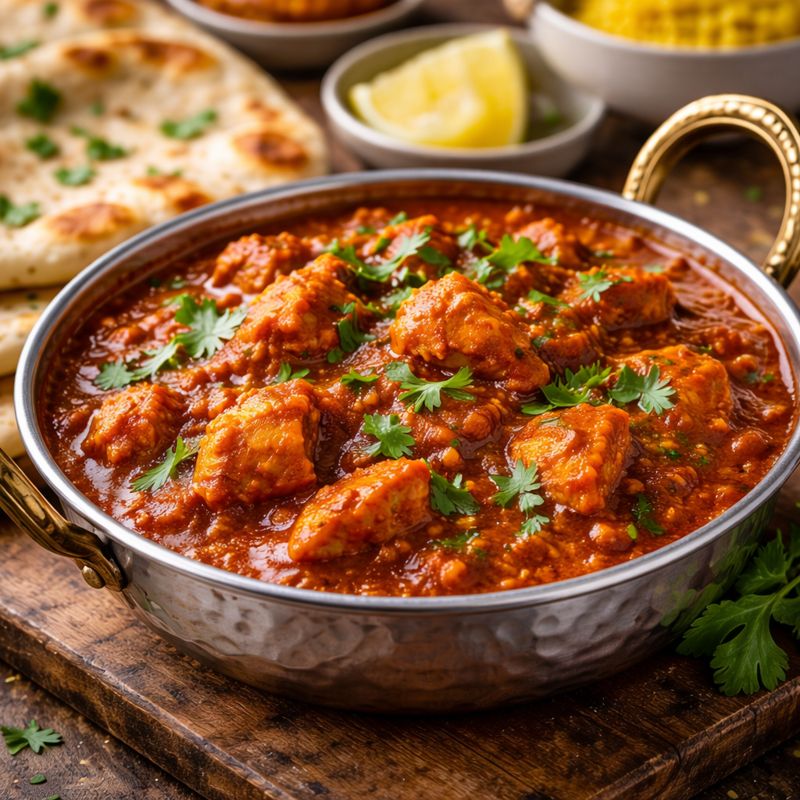
The core breakdown: workflow, heat, reduction, and finishing.
Read →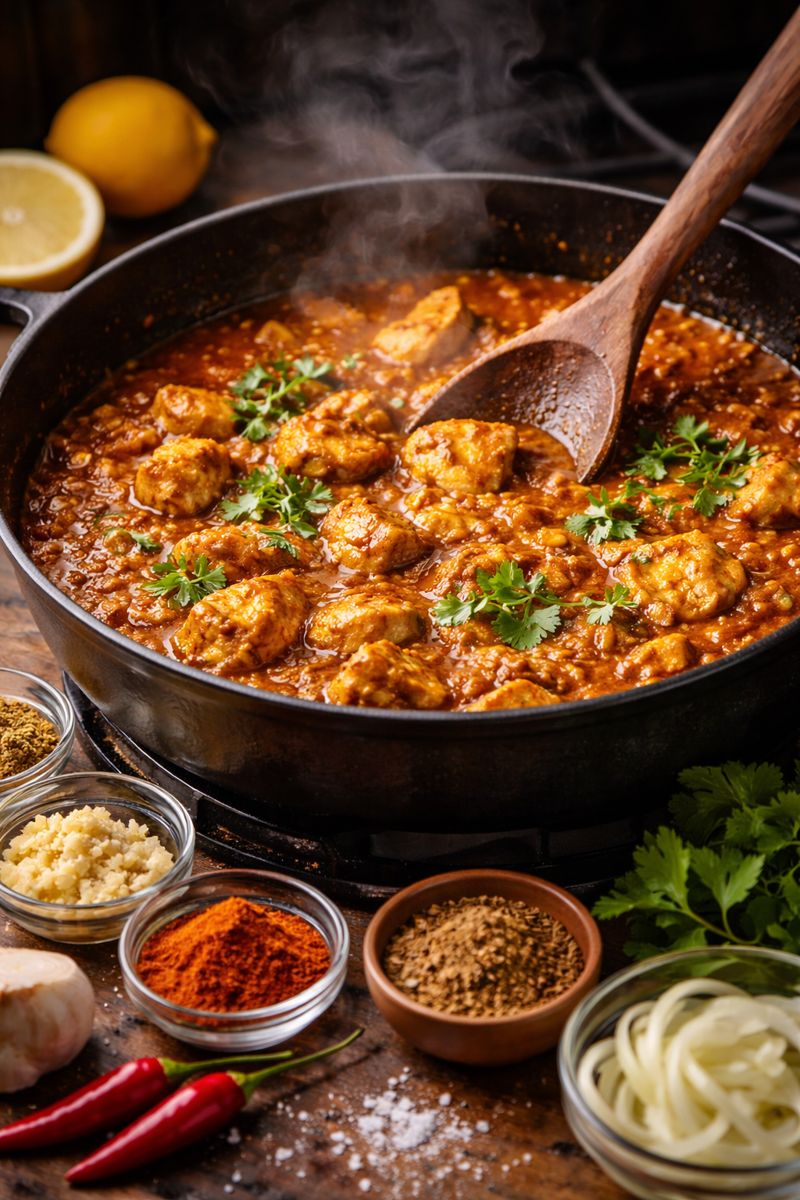
Why curry feels slow at home — and the restaurant system that makes it fast.
Read →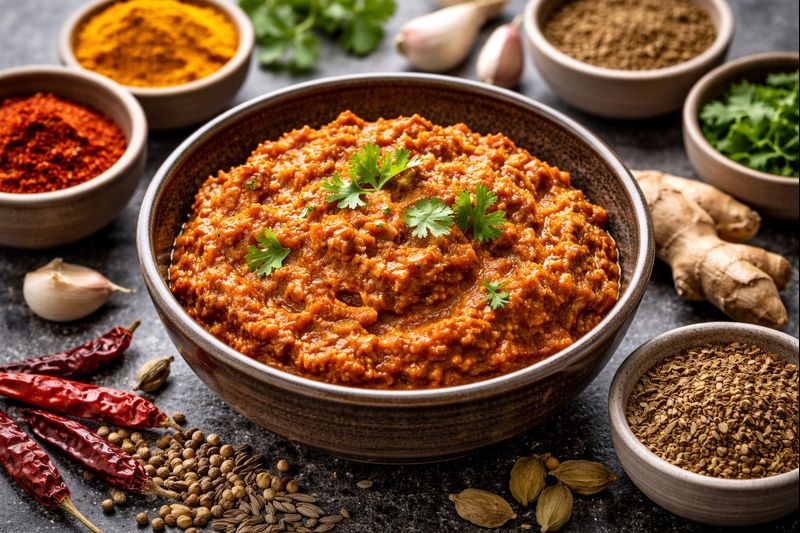
Why “just blend it” fails, and how restaurants build flavour.
Read →
What slow cookers remove (frying, reduction, finishing) — and how to fix it.
Read →If you want full recipes with timings and repeatable results, these are the core curry titles. If you want the full list, use the “Indian Curry” section on the Books page.
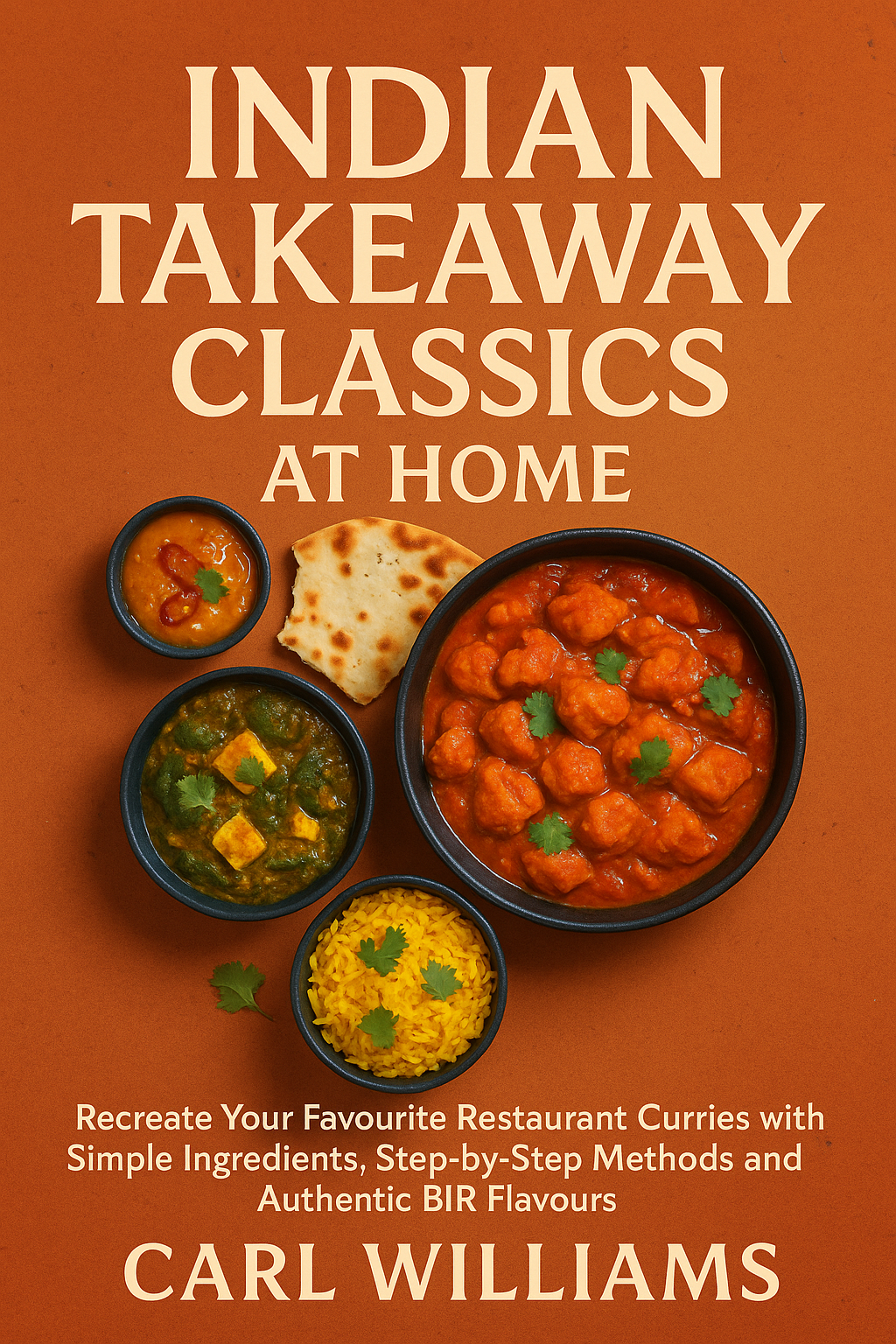
Proper BIR-style curries at home — simple ingredients, proven method.
Details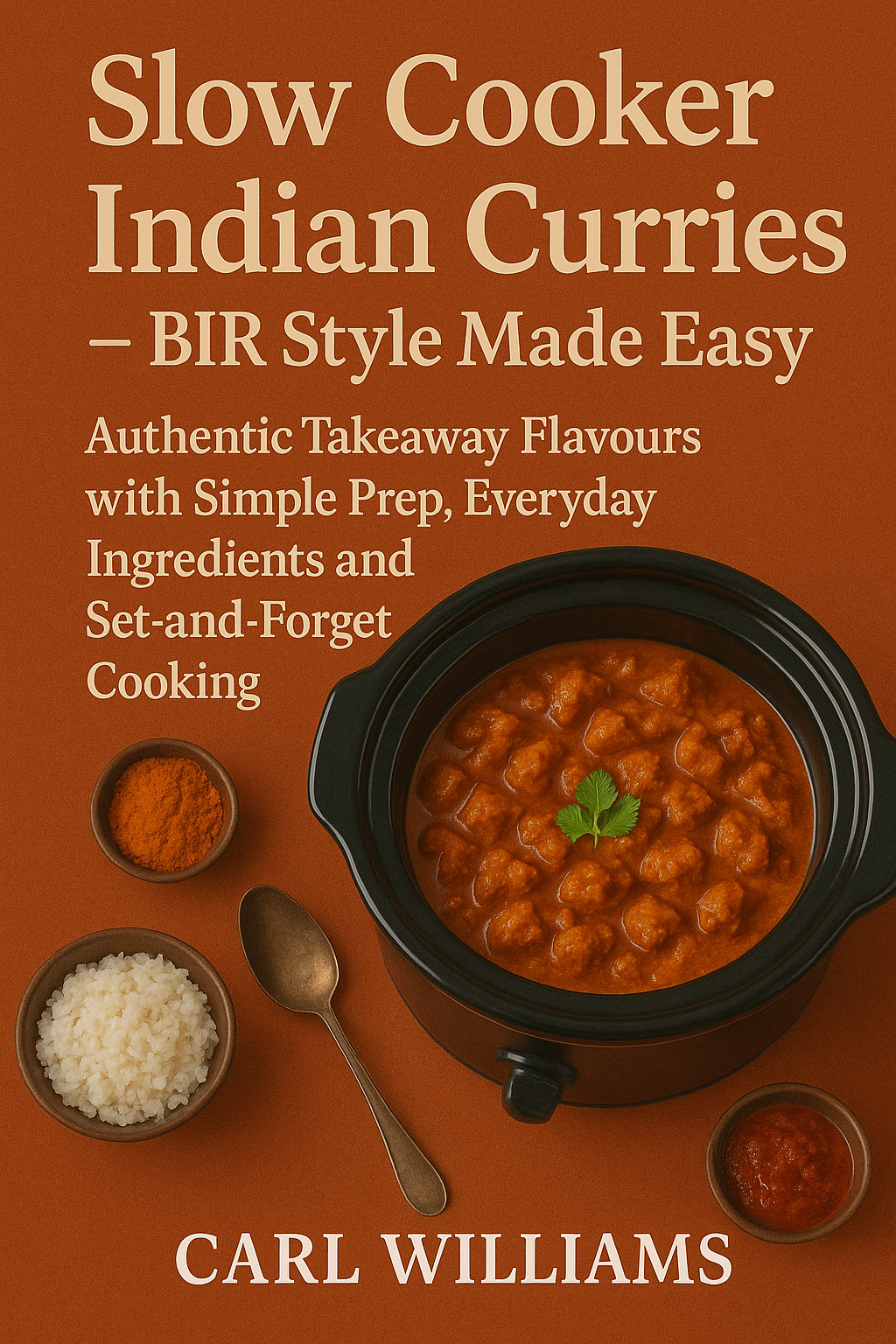
Slow cooker convenience with real curry house flavour — reliable timings and sauces.
Details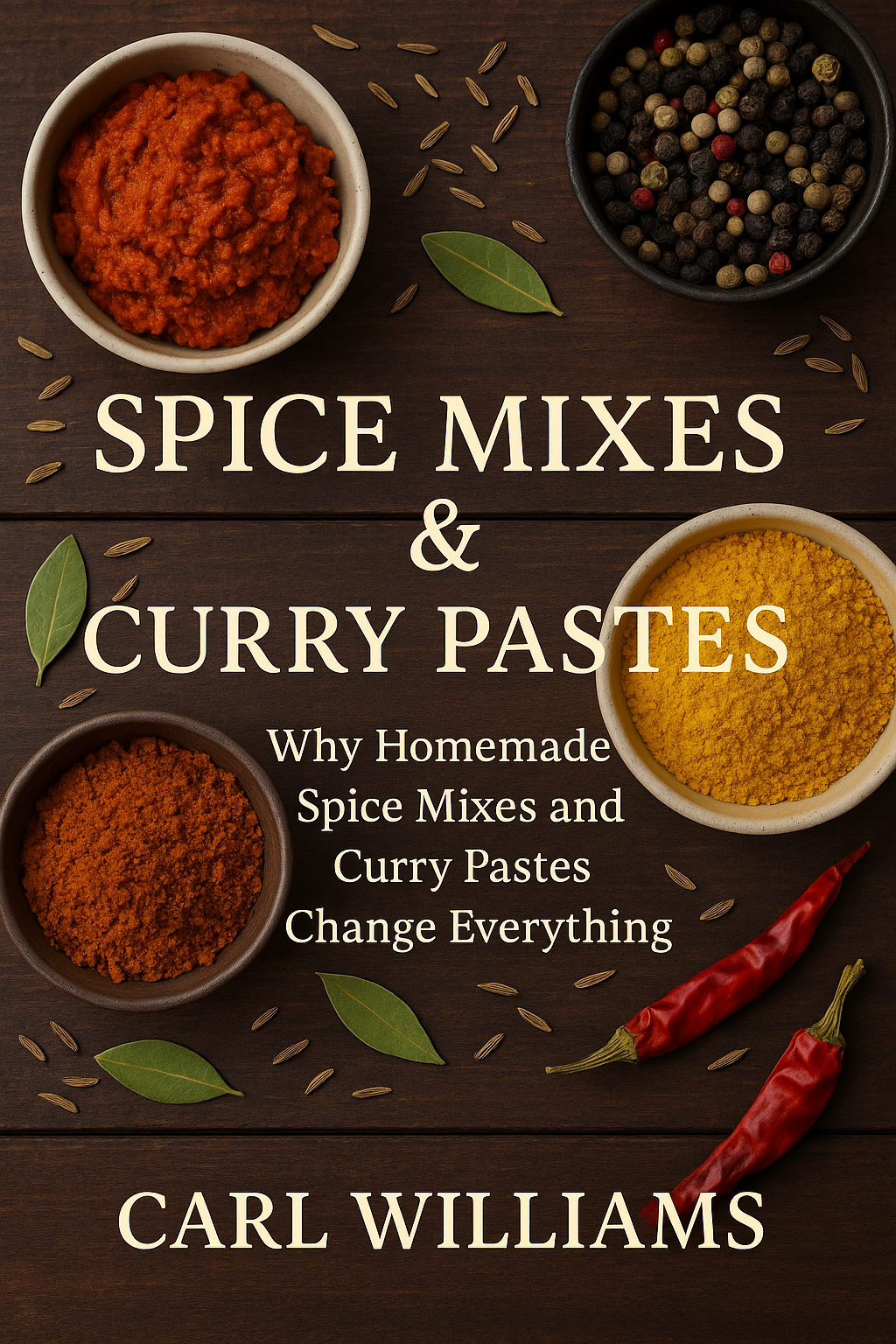
Authentic-tasting blends and pastes — ratios, toasting, storage and how to use them.
DetailsEvery curry post on the site — automatically updated when a new curry post is published.
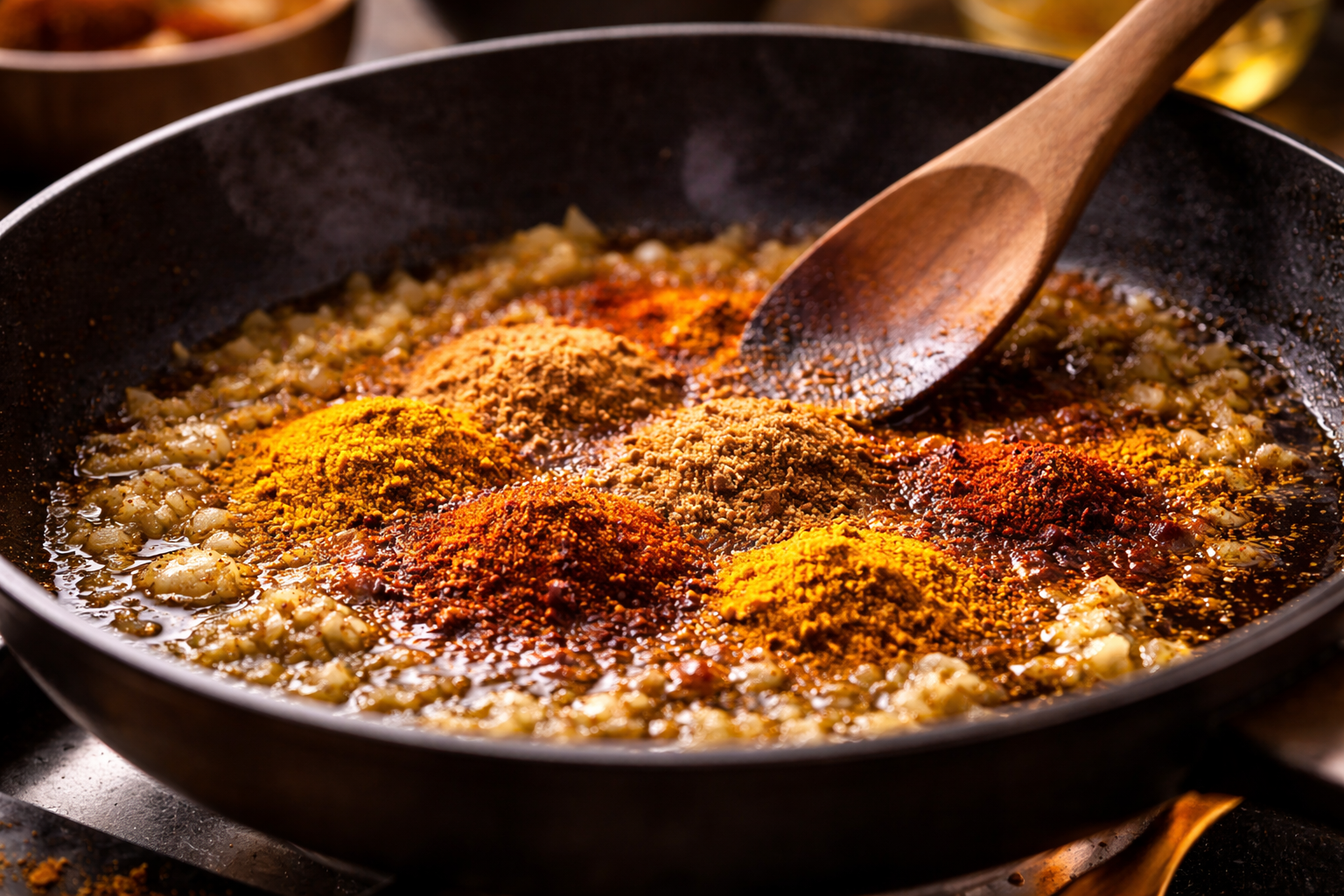
Spices need to be fried in oil to release their full flavour in curry. Many of their key flavour compounds dissolve better in fat than in water, which is why adding spices straight into liquid often produces a dull result. Proper frying helps deepen aroma, remove rawness and build the rounded flavour associated with restaurant-style curry.
Read →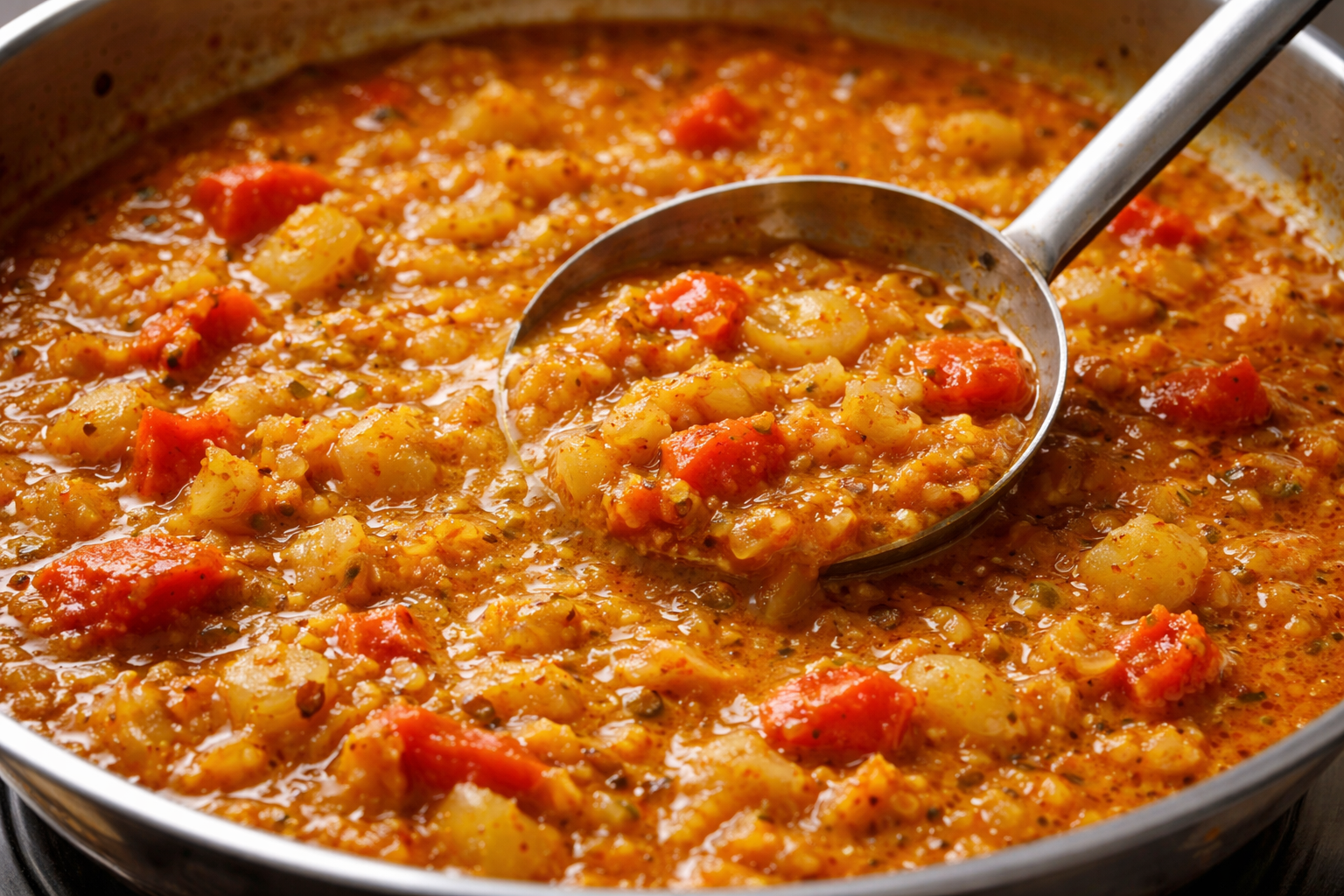
Base curry sauce tastes bland because the onions aren’t cooked properly, spices are underdeveloped, or the sauce is treated as finished food. Indian restaurants use base sauce as a flavour foundation, building depth later with spice timing, heat, and finishing ingredients.
Read →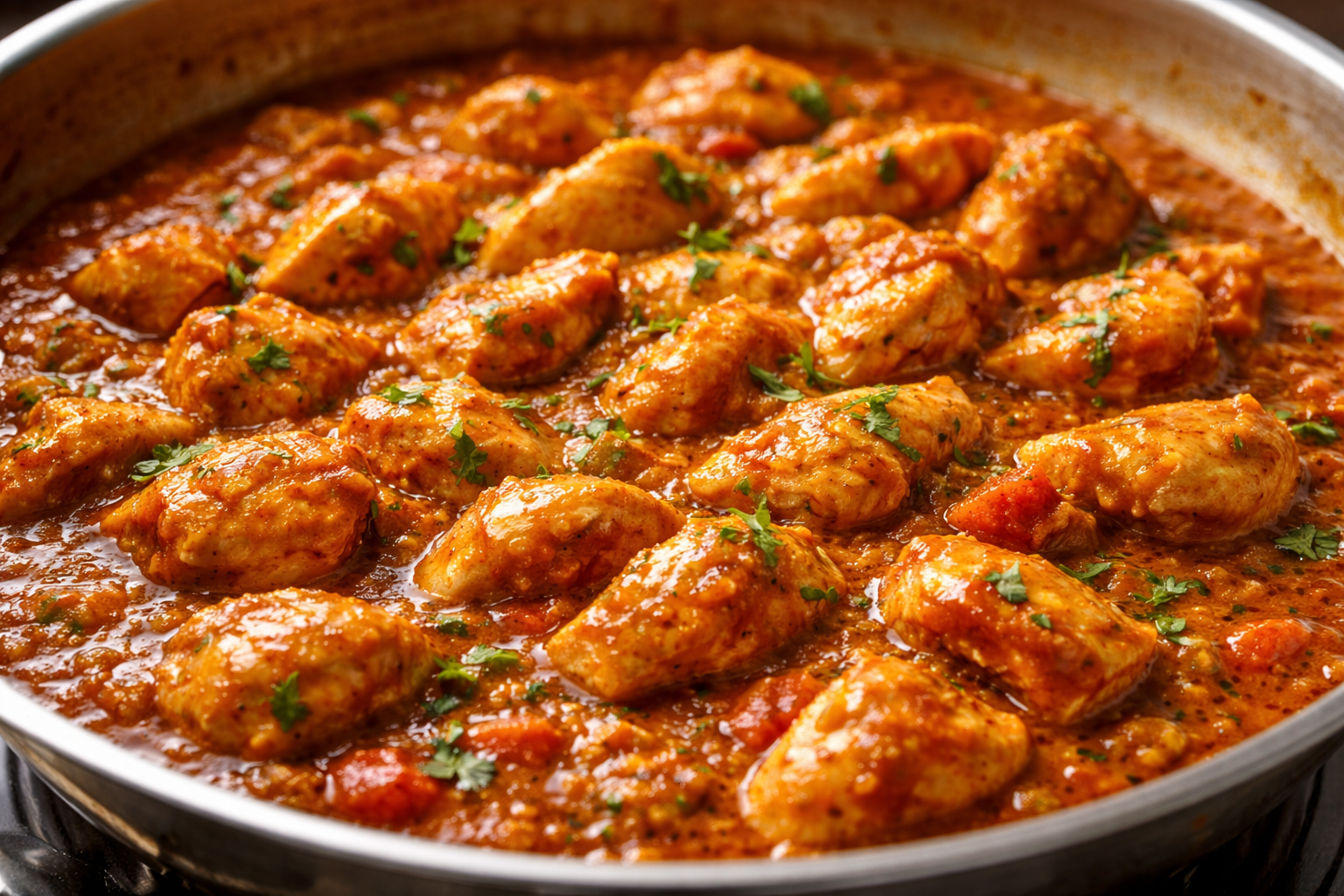
Chicken goes dry in curry because it is overcooked, added too early, or cooked at the wrong temperature. Indian restaurants keep chicken juicy by controlling cooking order, heat, and sauce timing — not by simmering meat for longer.
Read →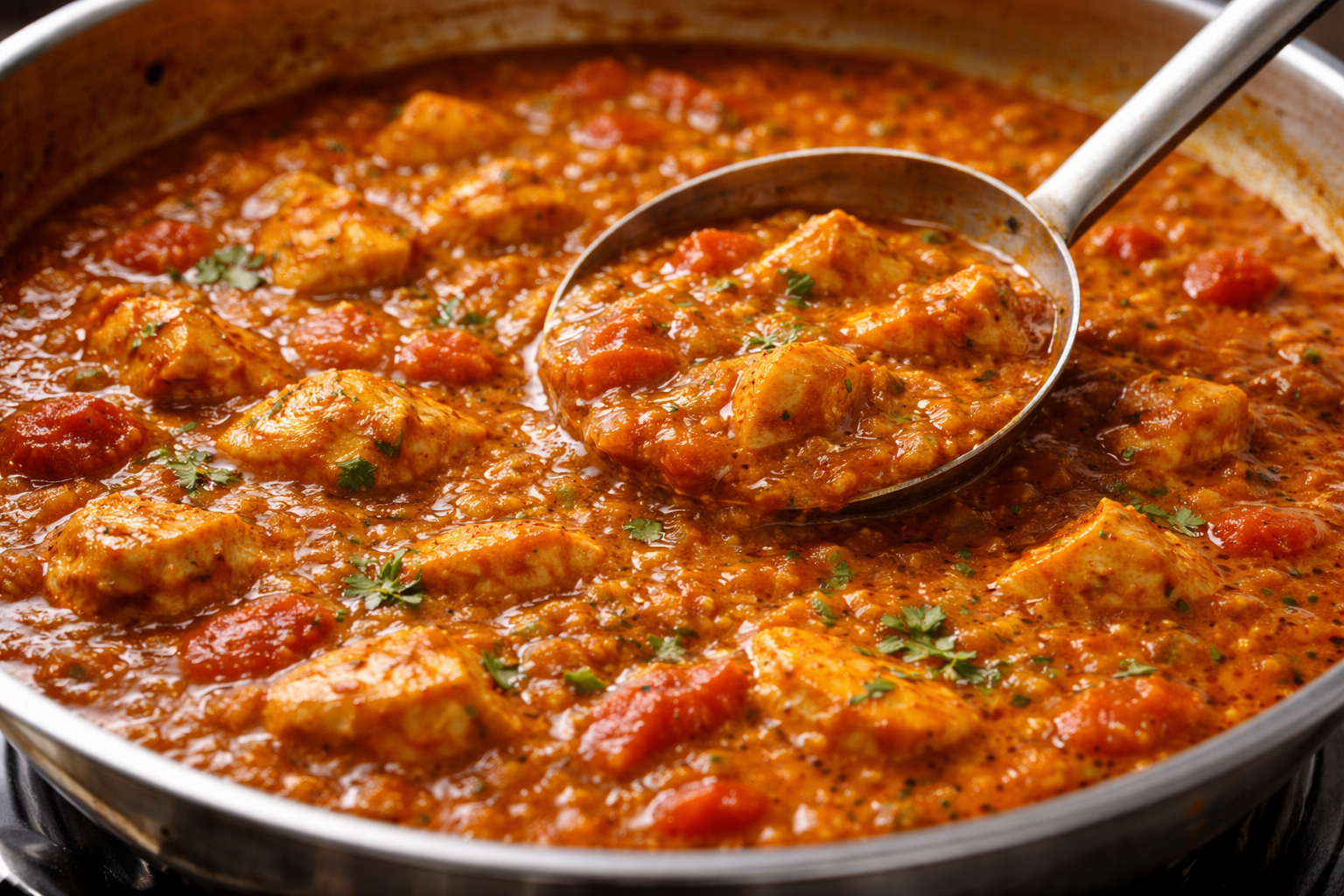
Curry sauce won’t thicken because onions break down incorrectly, water isn’t driven off, or fat and spices never emulsify. Indian restaurants get that glossy, clingy texture by controlling onion cooking, moisture reduction, and oil separation — not by adding thickeners.
Read →
Slow cookers struggle with Indian curries because they don’t allow proper frying of spices and onions, they trap steam instead of reducing sauce, and they blur flavour layers over long cooking. You fix this by doing the critical frying steps first, using the slow cooker only for controlled simmering, and finishing the curry at the end with heat, seasoning and reduction.
Read →
Samosas go soft after frying because moisture from the filling migrates into the pastry, the oil temperature is wrong, or steam is trapped during cooling. Restaurants keep samosas crisp by controlling filling moisture, frying at the correct temperature, and allowing steam to escape so the pastry stays dry and flaky.
Read →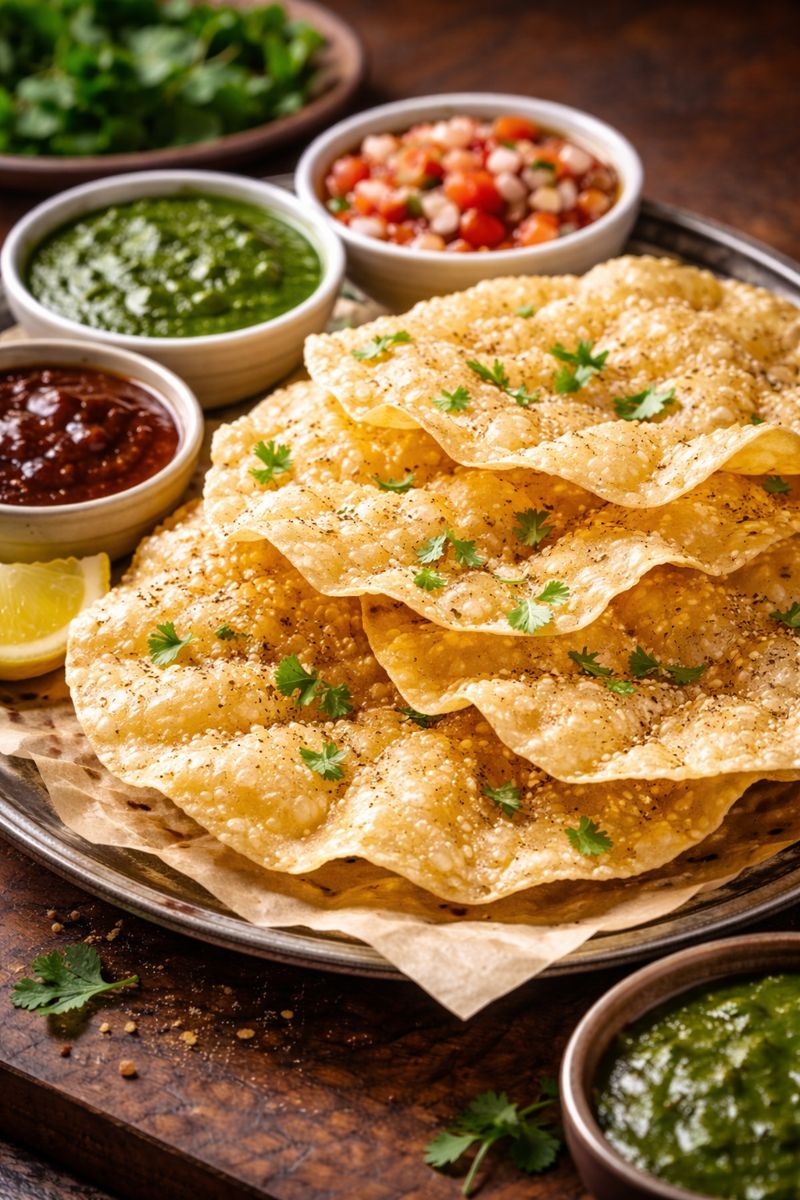
Poppadoms stay chewy or leathery at home because they are cooked too slowly, the heat isn’t high enough, or moisture isn’t driven off fast enough. Takeaways use very high heat for a very short time so the poppadom expands instantly, crisps fully, and dries before it can soften.
Read →
Pakoras go greasy when the batter is too wet, the oil temperature is too low, and the pakoras are cooked too slowly. Restaurants keep pakoras light by using a thicker batter, frying at the correct temperature, and cooking fast enough to set the crust before oil can soak in.
Read →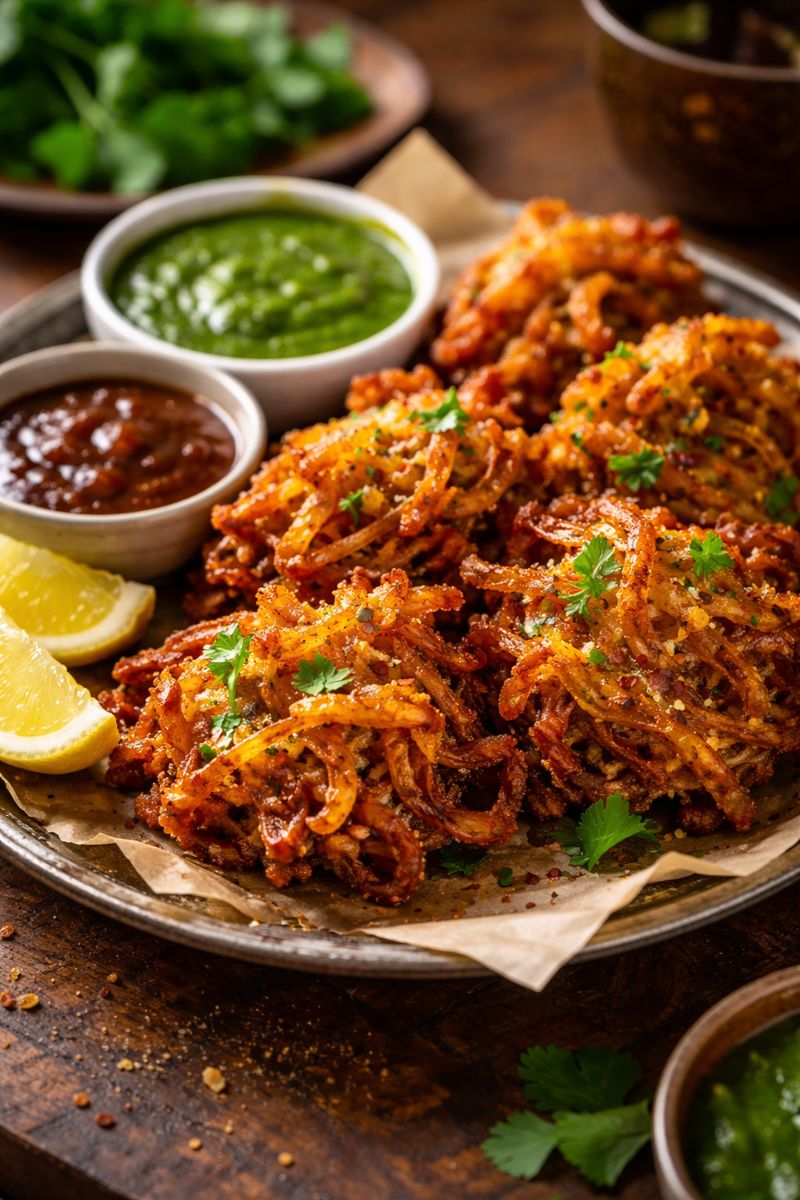
Onion bhajis go soggy when onion moisture turns to steam, the batter is too wet, the oil temperature is too low, and the bhajis aren’t fried long enough to drive off water. Fix it by salting and squeezing onions properly, using minimal batter to bind, frying at 170–180°C in small batches, and cooking until deep golden so the crust fully sets — then draining in a single layer so steam can escape.
Read →
Homemade curry takes a long time because you’re doing restaurant prep during dinner: slow onion base, repeated spice cooking, and long simmering to reduce. Restaurants cook fast by preparing a base sauce and core ingredients ahead of time, then building each curry in a hot pan with staged cooking(fry aromatics → fry spices/paste → add base sauce → reduce → finish). You can copy the same system at home and get takeaway-style results in 20–30 minutes once your base is ready.
Read →
If your homemade curry tastes “nice” but not takeaway, you’re not imagining it. The difference is rarely one magic spice. It’s usually process: heat management, the order things go in, how the sauce base is built, and whether you’re finishing the dish properly. Here are the common reasons curry tastes flat at home, and the simple fixes that make a big difference.
Read →
Homemade curry pastes taste flat when the spices haven’t been fried correctly, the onions/garlic/ginger haven’t cooked out, the paste is under-salted, and the curry isn’t finished with enough heat, reduction, and a small touch of acid. Fix it by cooking the paste in oil until it darkens slightly and smells nutty (not raw), seasoning early, adding fat where needed, and reducing the sauce so it clings — then finishing with a small amount of garam masala or fenugreek for aroma.
Read →BIR is a UK curry house style. It’s built for speed and consistency using a different workflow (often base sauce + fast finishing). It’s not regional home cooking — it’s aiming for takeaway flavour.
Not strictly. But you must replace what base sauce provides: body, balance, and speed. Without it, frying depth and reduction matter even more.
Usually: weak frying, too much liquid, and low heat (no reduction). Fix it by frying properly, reducing, and finishing with salt + acid + aromatics.
Gloss usually comes from reduction and emulsification (oil + sauce + heat + stirring). Use higher heat, staged liquid, and a short hot reduction near the end.
Slow cookers flatten flavour because they skip frying, reduction and finishing. Fix it by frying first, reducing at the end, and adding aromatics right before serving.
Want the core breakdown in one place? Read the takeaway-flavour guide →