
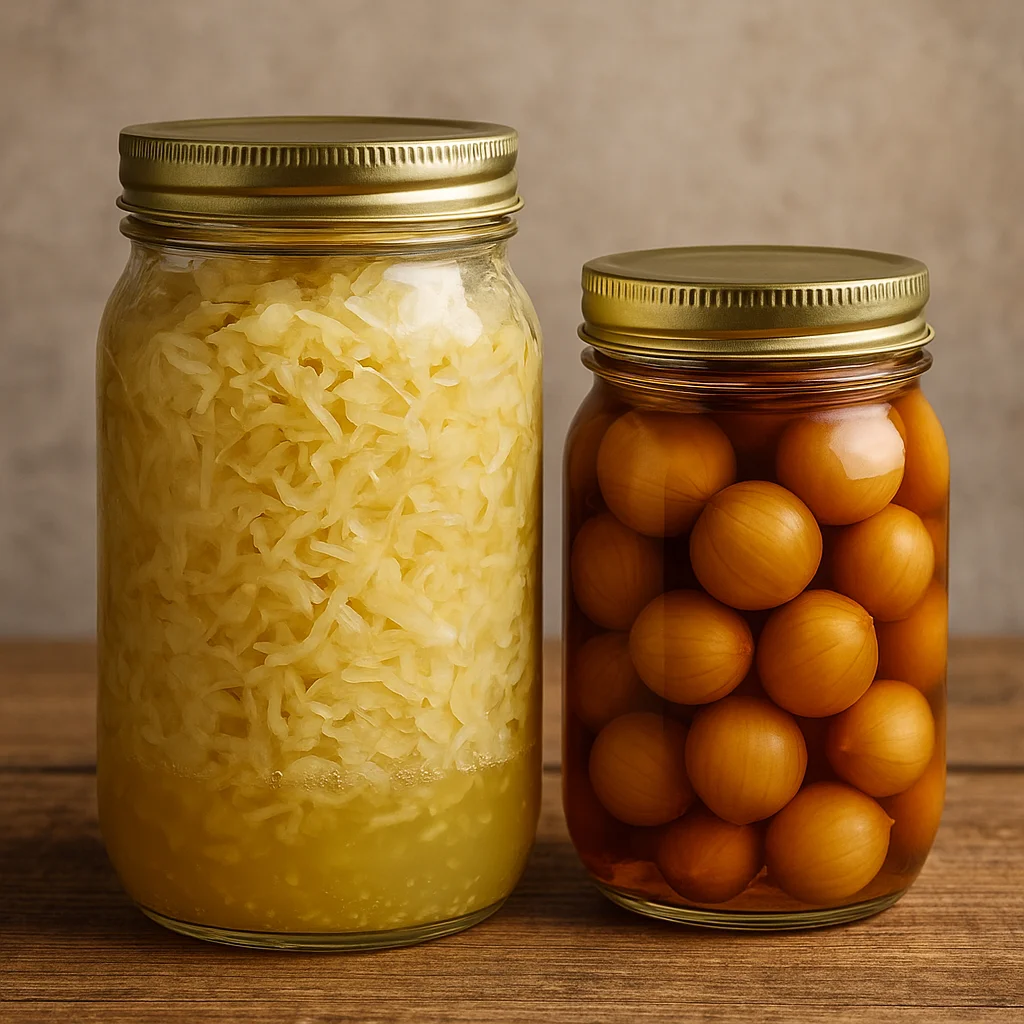
Pickling vs Fermentation: What’s the Real Difference?
Part of the Fermentation & Preserving Guides hub.
People often use the words interchangeably—but they’re not the same. This guide explains the differences so you can choose the right method for flavour, texture and storage.
Quick answer
Fermentation is when microbes (typically lactic acid bacteria) convert sugars in food into acid over time, so the food self-acidifies. Pickling is when you put food straight into an acidic liquid—usually vinegar—so it’s sour from day one. Fermented veg rely on salt + time; pickles rely on a correctly made vinegar brine.
Free Fermentation Safety Checklist
If you’re fermenting vegetables (not just vinegar pickling), get my Fermentation Safety Checklist (PDF) and avoid the most common beginner mistakes with salt, brine and surface issues.
Get the free checklistDefinitions (short and sharp)
Fermentation is when microbes convert natural sugars into acids and other compounds so food changes gradually over days or weeks. For vegetable ferments, lactic acid bacteria produce lactic acid, which sours and preserves the food.
Pickling is when you place food into a pre-made acidic liquid—normally vinegar mixed with water, salt, and sometimes sugar and spices—so the acidity is present from the start.
Method at a glance
This table shows the main differences side by side:
| Aspect | Fermentation | Pickling |
|---|---|---|
| Acidity source | Produced by microbes (lactic acid bacteria) | Added directly (vinegar / acidic brine) |
| Time | Days to weeks (temperature and taste dependent) | Immediate sourness; flavour improves over hours to days |
| Flavour | Complex, tangy, evolving; often deeper and more savoury | Bright, sharp, consistent; vinegar-forward |
| Core controls | Salt level, submersion under brine, limiting oxygen | Vinegar strength, brine recipe, full coverage of food |
| Examples | Sauerkraut, kimchi, fermented chilli sauce, curtido | Pickled onions, gherkins, beetroot, quick pickled veg |
Safety basics (headline principles only)
Both methods can be safe at home if you follow tested recipes and keep control of the fundamentals:
- Fermentation: use an appropriate salt level, keep vegetables pushed below the brine, and minimise oxygen exposure at the surface. Discard batches with fuzzy mould, unusual colours, or rotten/putrid odours.
- Pickling: use food-grade vinegar of known strength, follow a tested brine recipe, and keep food fully submerged in clean jars.
Flavour and texture differences
Fermented veg and vinegar pickles can both be sour, but they don’t taste the same:
- Fermented veg: tangy, layered acidity with savoury depth. Flavour builds over time.
- Vinegar pickles: bright, sharp acidity with a clearer “vinegar note”. The vinegar type (malt, cider, wine) stands out.
Texture can differ too. Good ferments stay crisp when salt and temperature are right. Vinegar pickles can be crisp or softer depending on the method (quick pickle vs heat-processed jar).
Which should you use?
- Want fast results? Vinegar pickling gives sour veg within hours to a couple of days.
- Want depth and live cultures? Fermentation creates foods that can contain live microbes (if not heat-treated).
- Want bright toppings? Pickled onions, carrots and cucumbers are hard to beat.
- Want complex condiments? Fermented chilli sauce and kraut-style ferments deliver layered flavour.
Want clear, tested methods for both?
My beginner-friendly books walk you through salt levels, vinegar brines, safe storage and troubleshooting using UK measurements and supermarket ingredients.
Start the right way
For step-by-step methods, UK-specific guidance and practical troubleshooting, these are strong starting points:
Fermentation for the Absolute Beginner Pickling for the Absolute Beginner
Summary
Fermenting uses salt, time and microbes so the food slowly creates its own acid and complex flavour. Pickling uses a ready-made acidic brine for instant sharpness and consistent results. Once you understand the difference, it’s much easier to choose the right method for each ingredient and get safe, repeatable results at home.