Does Sourdough Bread Contain Probiotics? The Truth
A lot of people now believe sourdough bread is a probiotic food. It sounds reasonable at first because sourdough starts with live bacteria and wild yeast. But that does not mean the final loaf still contains live probiotics. In fact, once sourdough bread is baked, those microbes are no longer alive. So the truth is simple: sourdough is fermented, but the finished bread is not a probiotic food.
Quick Answer
No, baked sourdough bread does not contain live probiotics. A sourdough starter does contain living bacteria and yeasts during fermentation, but the heat of baking kills them. Sourdough can still be easier to digest for some people and may offer nutritional benefits compared with standard bread, but live probiotics are not one of them.
1) What probiotics actually are
Probiotics are live microorganisms that can provide a health benefit when consumed in adequate amounts. The key word there is live. If the microbes are dead by the time you eat the food, the food is not probiotic.
Common probiotic foods include certain live yogurts, kefir and some raw fermented vegetables. These foods are either eaten without high-heat cooking or kept in a form where the live cultures remain active until consumption.
2) Sourdough fermentation does involve live microbes
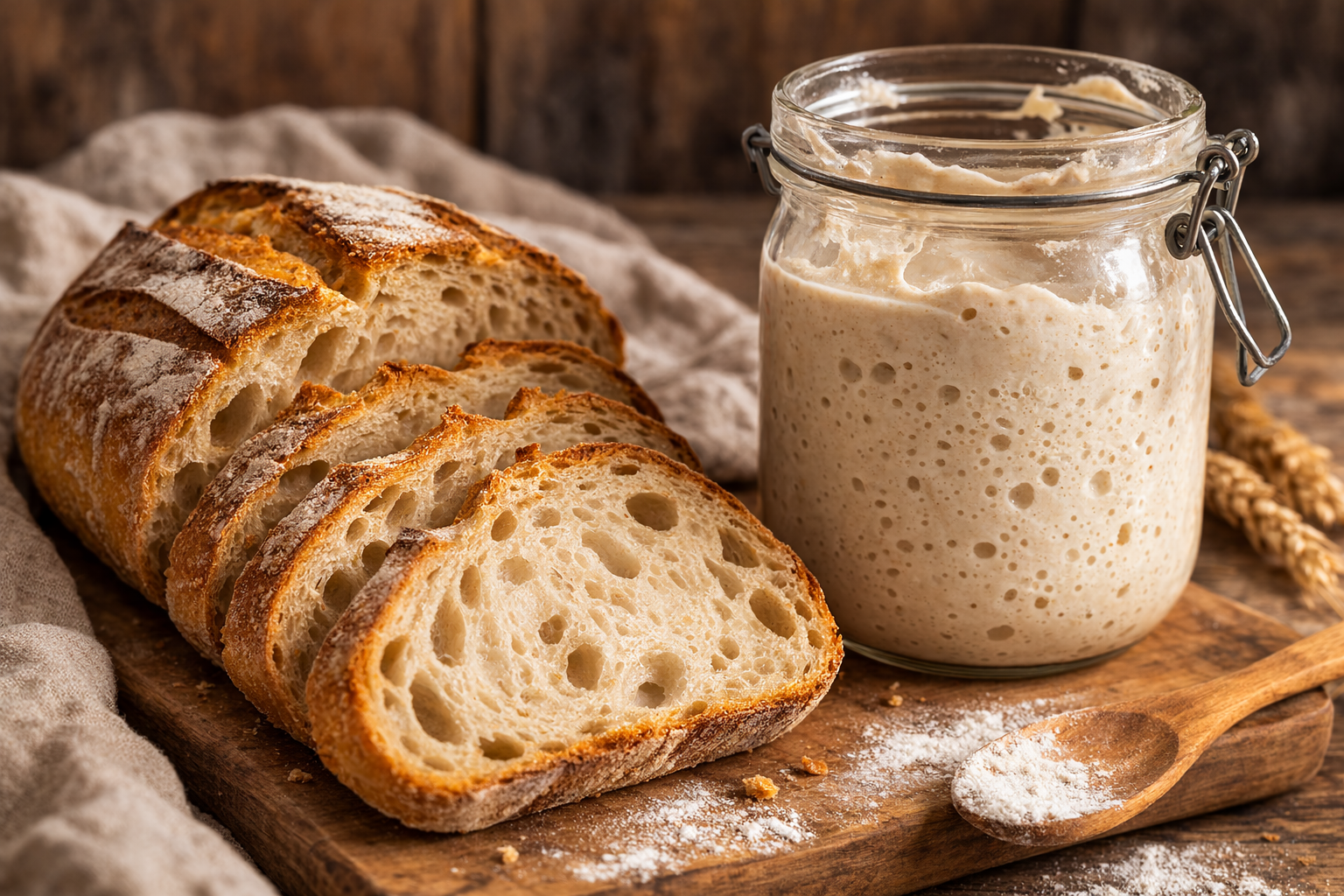
This is where the confusion starts. A sourdough starter contains live lactic acid bacteria and wild yeasts. These microbes ferment the flour and water, producing acids, flavour compounds and gas. That fermentation changes the dough in useful ways.
- The bacteria help acidify the dough and influence flavour.
- The yeasts help the dough rise.
- The fermentation process can change digestibility and dough structure.
So yes, the starter is alive. Yes, the dough contains microbes before baking. But that still does not mean the baked loaf contains live probiotics.
3) Baking kills the live cultures
Sourdough bread is baked in an oven at high temperature. That heat is enough to kill the live bacteria and yeasts in the dough. Once the loaf is properly baked, the microorganisms that were active during fermentation are no longer alive in the finished bread.
This is the main fact many articles and social media posts get wrong. They blur together two different things:
- The dough is fermented by live organisms before baking.
- The finished loaf is baked at a temperature that kills those organisms.
- Therefore the final bread is fermented, but not probiotic.
4) Why sourdough can still be beneficial
None of this means sourdough is overhyped rubbish. It can still be a very good bread. Fermentation changes the dough before baking, and those changes may still matter even after the microbes are dead.
- Flavour: sourdough develops more complexity and depth than many standard loaves.
- Texture: long fermentation can improve crumb structure and crust quality.
- Digestibility: some people find long-fermented sourdough easier to tolerate than standard bread.
- Phytic acid reduction: fermentation may improve mineral availability compared with quickly made bread.
- Slower digestion: some sourdough breads may produce a gentler blood sugar response than highly processed white bread.
Those are real reasons to eat sourdough. But the benefit is coming from the fermentation process, not from live probiotics surviving in the finished loaf.
5) Fermented does not always mean probiotic
This is the broader lesson. People often use the words fermented and probiotic as if they mean the same thing. They do not.
| Food | Fermented? | Usually contains live microbes when eaten? |
|---|---|---|
| Live yogurt | Yes | Usually yes |
| Kefir | Yes | Yes |
| Raw sauerkraut | Yes | Yes |
| Kimchi | Yes | Usually yes |
| Sourdough bread | Yes | No |
That is why calling sourdough bread a probiotic food is inaccurate. It is better described as a fermented bread.
6) Why this myth keeps spreading
The myth spreads because it sounds close enough to true. People hear that sourdough uses beneficial bacteria, then jump to the idea that those bacteria are still alive in the loaf. Add in wellness marketing, oversimplified social media posts and vague health claims, and the misunderstanding spreads quickly.
But the scientific point is not complicated. Live cultures in the starter do not equal live probiotics in the baked bread.
So should you still eat sourdough?
Yes, if you enjoy it and it suits you. Good sourdough can be excellent bread. It may have better flavour, a better texture and certain fermentation-related benefits over standard factory bread. Just do not buy it on the false belief that it is delivering live probiotic bacteria after baking.
If your goal is specifically to eat probiotic foods, look instead at foods that are consumed with their live cultures still intact.
Want practical fermentation advice without the myths?
I write clear beginner-friendly books and guides on fermentation, preserving, gut-friendly foods and home methods that actually make sense.
Learn fermentation properly
Clear, practical guidance without hype, confusion or food myths.
See the BooksSummary
Does sourdough bread contain probiotics? No. The starter contains live bacteria and yeasts during fermentation, but the baking process kills them. That means sourdough bread is fermented, but it is not a live probiotic food once baked. It can still have genuine benefits — just not the one many people claim.