
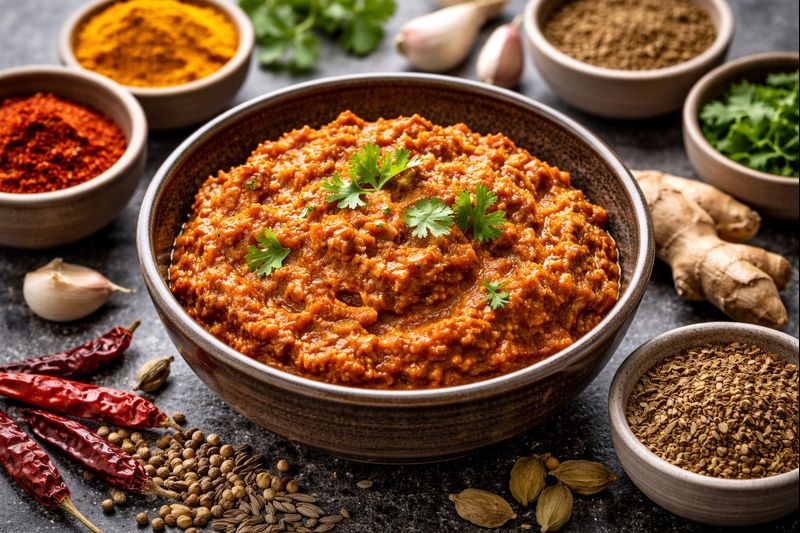
Why Homemade Curry Pastes Taste Flat (And How Restaurants Fix It)
If your homemade curry paste tastes “fine” but the finished curry still feels a bit dull, you’re not alone. The problem usually isn’t the recipe. It’s how the paste is cooked, what’s missing from the flavour structure (salt, fat, acid), and whether you finish the dish properly. Here are the real reasons curry pastes taste flat at home — and the fixes restaurants use every day.
Quick Answer
Homemade curry pastes taste flat when the spices haven’t been fried correctly, the onions/garlic/ginger haven’t cooked out, the paste is under-salted, and the curry isn’t finished with enough heat, reduction, and a small touch of acid. Fix it by cooking the paste in oil until it darkens slightly and smells nutty (not raw), seasoning early, adding fat where needed, and reducing the sauce so it clings — then finishing with a small amount of garam masala or fenugreek for aroma.
1) You’re tasting “raw spice” (because the paste hasn’t been cooked)
Many pastes are blended and then added straight to a curry with only a quick warm-through. That leaves you with a powdery, dusty spice flavour. Restaurants cook paste like an ingredient — not like a garnish.
- Fix: fry the paste in oil on medium-high heat until the raw smell disappears and the oil starts to separate at the edges.
- Clue: if the paste smells like a spice jar rather than food, it isn’t cooked yet.
2) Your onion/garlic/ginger flavour is harsh (not sweet and cooked)
When aromatics are undercooked, they’re sharp. When they’re cooked properly, they turn savoury and slightly sweet, which is what makes curry taste “complete”.
3) Not enough fat (fat is a flavour carrier, not just “extra calories”)
Restaurants use fat strategically. Not necessarily huge amounts — but enough to carry flavour and fry spices properly. If you try to cook paste “dry”, it steams and goes flat.
- Fix: use enough oil/ghee to fry the paste properly; aim for glossy, not greasy.
- Balance: you can still keep portions sensible; the point is correct cooking.
4) Your seasoning is too late (or too timid)
Salt doesn’t just make food salty — it makes flavour show up. If you wait until the end, you often chase flavour with extra chilli or extra spice, and the curry still feels muted.
5) Your heat level is too gentle (so nothing concentrates)
Takeaway curry is built quickly with bursts of higher heat. Gentle simmering can be fine, but it often turns a paste-based curry into a stew.
- Fix: use higher heat in short stages: fry paste, add base sauce, then reduce properly.
- Clue: if your curry stays watery, you’re not reducing enough.
6) You’re missing “finishing flavour” (aroma + a tiny bit of acid)
Restaurant curry often has a bright edge. That might be tomato, yoghurt, lemon/lime, or a small acidic element. Without it, paste-based curries can taste heavy.
- Finish with aroma: a small pinch of garam masala at the end lifts the whole dish.
- Use fenugreek properly: crushed dried fenugreek (kasuri methi) is powerful; a little goes a long way.
- Add acid carefully: a small squeeze of lemon/lime or a spoon of yoghurt at the end can “wake up” the curry.
- Reduce before serving: the sauce should cling to meat/veg, not pour like soup.
Quick comparison: “paste thrown in” vs “paste cooked properly”
| Aspect | Common home approach | Restaurant approach |
|---|---|---|
| Paste cooking | Warmed briefly | Fried until cooked and glossy |
| Seasoning | Mostly at the end | Seasoned in stages |
| Heat | Gentle simmer | High heat in bursts + reduction |
| Finish | Serve when hot | Aroma + acid + reduction |
Want curry pastes that actually deliver?
My books show the full method step-by-step: paste building, frying stages, base sauce, finishing, and repeatable recipes using UK ingredients.
Get the full method, timings & paste recipes
If you want a reliable “do this, then this” system (not random tips), start here:
UK measurements, plain English, repeatable results.Summary
Homemade curry pastes taste flat for predictable reasons: the paste isn’t fried properly, aromatics aren’t cooked out, seasoning is too light, and the curry isn’t reduced and finished. Cook the paste like restaurants do — in oil, in stages, with proper seasoning and finishing — and the same ingredients suddenly taste like a different meal. If you want exact paste recipes, timings and a full BIR workflow, use a tested method you can repeat.