
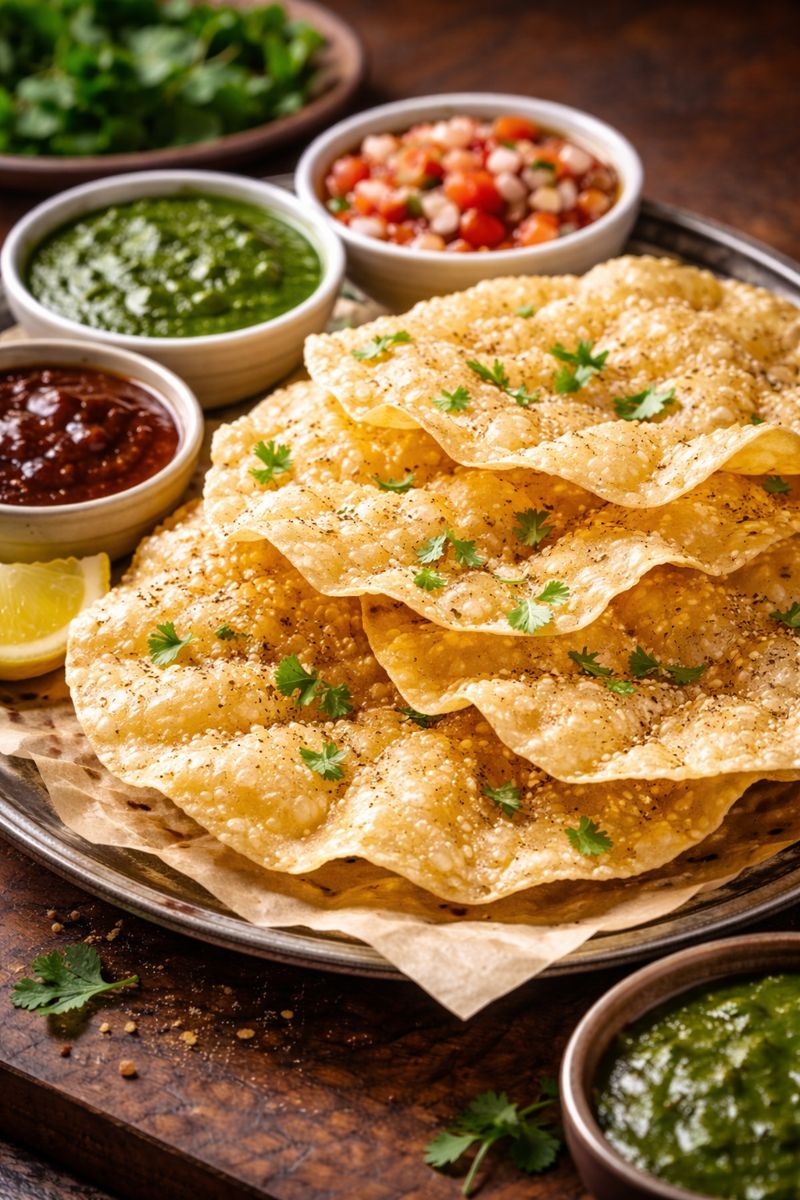
Why Poppadoms Never Crisp Properly at Home (And the Takeaway Method)
If your poppadoms come out chewy, leathery, or half-crisp with soft patches, the problem isn’t the brand — it’s the cooking method. Poppadoms need intense heat for a very short time. Cook them slowly and they dry unevenly and stay flexible instead of crisp. Here’s why poppadoms fail at home — and how takeaways cook them properly.
Quick Answer
Poppadoms don’t crisp properly when they’re cooked too slowly or at too low a heat. Takeaways use very high heat for a few seconds so the poppadom expands instantly, dries evenly, and crisps before moisture can soften it.
1) You’re cooking them too slowly
Poppadoms are designed to expand rapidly. Slow cooking allows moisture to escape unevenly, leaving parts crisp and parts chewy.
2) The heat isn’t high enough
Whether frying, grilling or using a flame, poppadoms need intense heat. Low heat dries them rather than puffing them.
3) Microwaving works — but only if done properly
Microwaves can work, but only if the poppadom is cooked quickly and evenly. Long microwave times cause leathery results.
4) Oil frying fails when the oil isn’t hot enough
Oil-fried poppadoms only work if the oil is extremely hot. Warm oil causes blistering without crispness.
- Use very high heat.
- Cook for seconds, not minutes.
- Flip quickly for even expansion.
- Remove as soon as fully puffed.
- Drain briefly and serve immediately.
Home vs takeaway poppadoms
| Aspect | Home method | Takeaway method |
|---|---|---|
| Heat | Moderate | Very high |
| Time | Long | Seconds |
| Texture | Chewy | Crisp |
| Moisture | Uneven | Driven off fast |
Want starters that actually match takeaway quality?
My books explain the cooking logic behind Indian restaurant food — not just recipes.
Summary
Poppadoms fail at home because they’re cooked too slowly and at too low a heat. Use intense heat for a very short time and stop as soon as they expand. Do that and poppadoms become crisp, light, and properly dried — just like takeaway.