
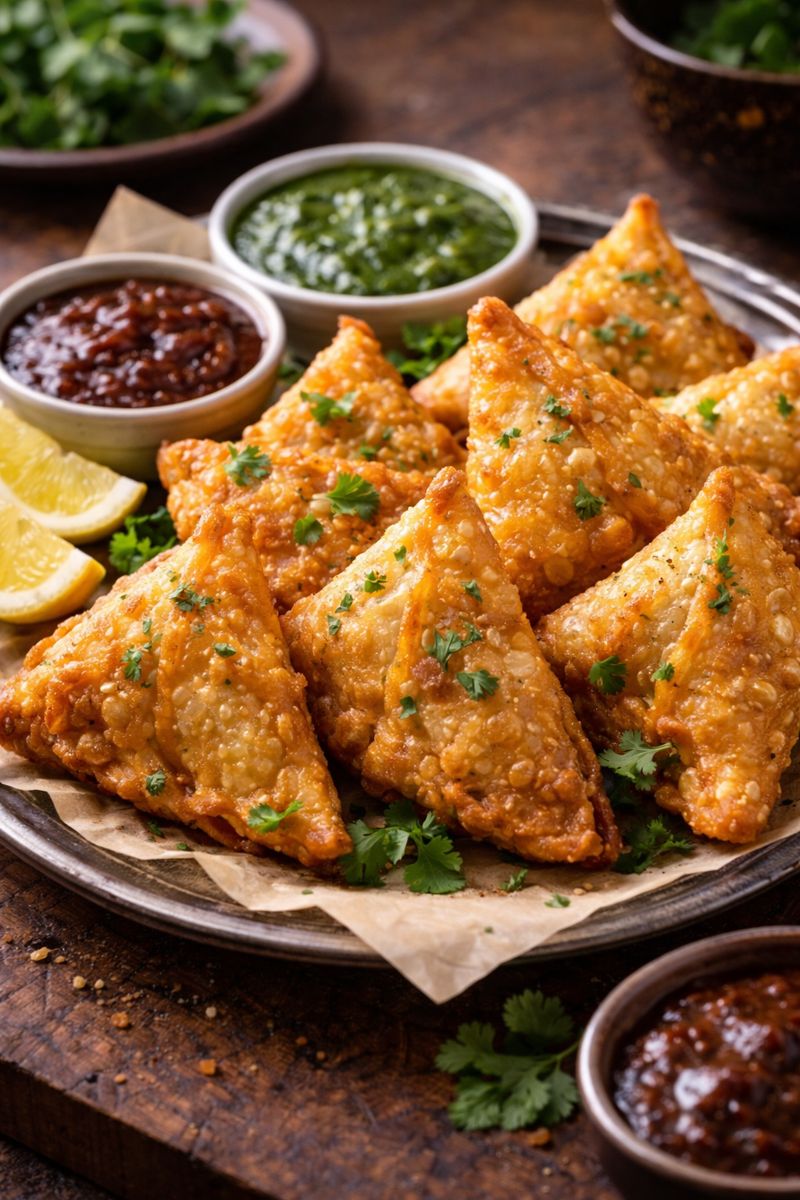
Why Samosas Go Soft After Frying (And How Restaurants Keep Them Crisp)
If your samosas come out crisp but soften within minutes, the problem isn’t the pastry — it’s moisture. Steam from the filling migrates into the pastry as the samosas cool, turning crisp layers soft. Here’s why samosas lose crunch after frying and how restaurants stop it happening.
Quick Answer
Samosas go soft because moisture from the filling moves into the pastry, the oil temperature is wrong, or steam is trapped during cooling. Restaurants keep samosas crisp by managing filling moisture, frying at the correct temperature, and allowing steam to escape before serving.
1) Your filling contains too much moisture
Potato, peas and onion all release steam when hot. If the filling is wet, that steam has nowhere to go except into the pastry.
- Fix: cook filling until dry and crumbly, not soft or mashy.
- Clue: if steam pours out when cutting, moisture is too high.
2) The oil temperature is wrong
Oil that’s too cool allows oil absorption; oil that’s too hot browns the outside before moisture can escape. Both lead to soggy pastry.
3) You’re not frying long enough
Samosas need time for moisture to escape through the pastry layers. Pale samosas often look done but are still steaming inside.
4) Steam is trapped during cooling
Piling samosas together traps steam. Restaurants vent samosas briefly so steam escapes before serving.
- Cook filling until dry.
- Seal pastry properly.
- Fry at a steady 170–175°C.
- Cook until deep golden.
- Drain and cool with airflow.
Home vs restaurant samosas
| Aspect | Home method | Restaurant method |
|---|---|---|
| Filling | Moist | Dry & crumbly |
| Oil temp | Uncontrolled | 170–175°C |
| Cooling | Stacked | Vent steam |
| Result | Soft | Crisp |
Want starters that actually stay crisp?
My books explain the cooking logic behind Indian restaurant food — not just recipes.
Summary
Soft samosas are caused by moisture, incorrect oil temperature, and trapped steam. Dry the filling, fry properly, and vent steam before serving. Do that and samosas stay crisp — not soggy — just like restaurant versions.