
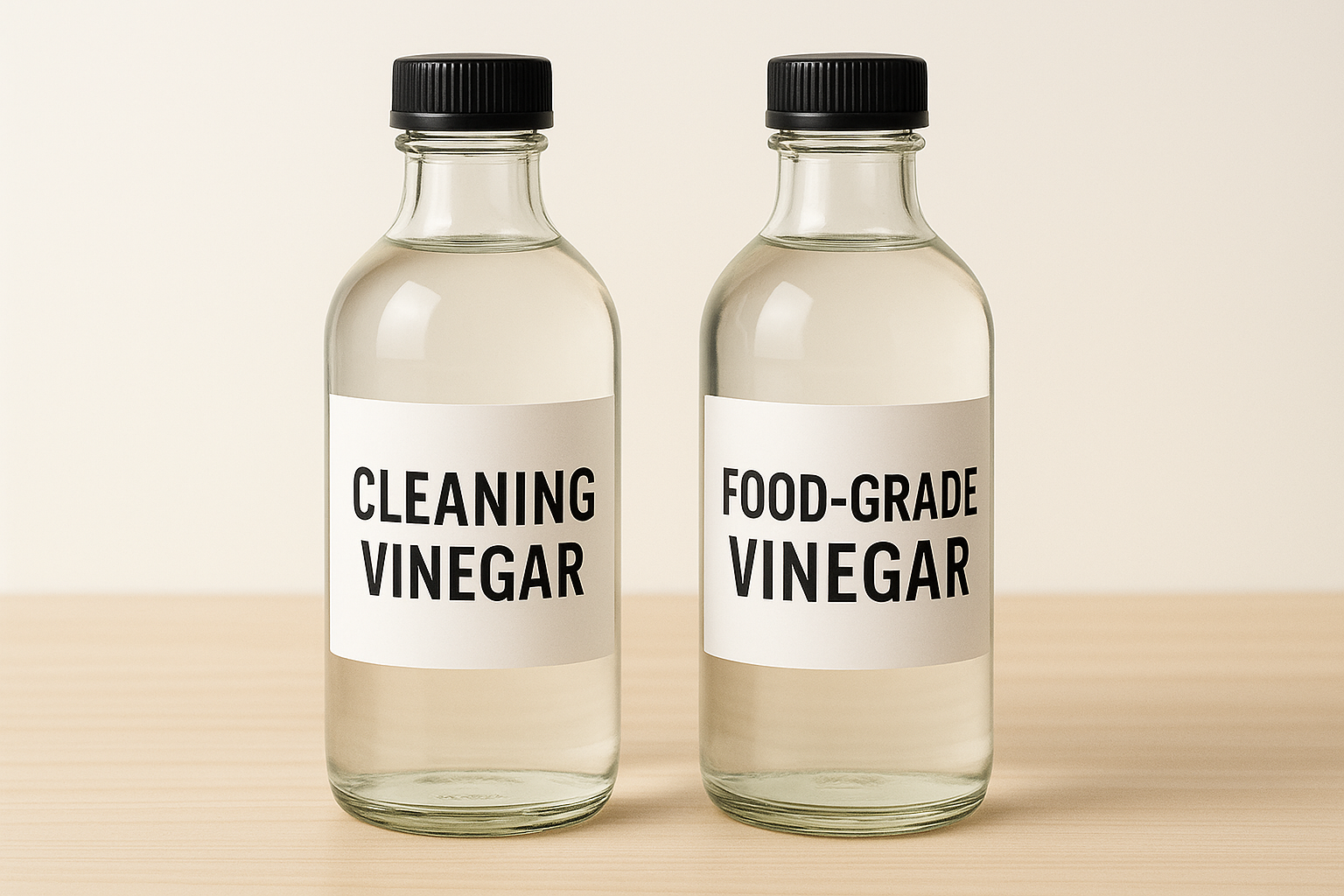
Cleaning vs Food-Grade Vinegar
Part of the Fermentation & Preserving Guides hub.
Yes, there’s a difference—and confusing them could be harmful. Here’s how to spot cleaning vinegar vs food-grade vinegar, and how to use vinegar safely in your kitchen and around the home.
Quick answer
Food-grade vinegar is made for eating and preserving under food safety rules, typically around 5% acidity, and is labelled for culinary use. Cleaning vinegar is made for household cleaning, is often stronger, and is not intended for eating or pickling. If the label doesn’t clearly say it’s for food use, don’t consume it.
Free Fermentation Safety Checklist
Using vinegar alongside ferments and preserves? Get my Fermentation Safety Checklist (PDF) and avoid common beginner mistakes with salt, brine and storage.
Get the free checklistFood-grade vinegar vs cleaning vinegar at a glance
Not all vinegar on the shelf is safe to eat. Some bottles are made purely for cleaning sinks, bathrooms and glass—not for salad dressings or pickles. This side-by-side view shows the key differences.
Food-grade vinegar
- Made for eating and cooking
- Typically around 5% acidity
- Produced under food safety standards
- Label mentions cooking, dressings, marinades or pickling
- Use for pickling, preserving, sauces and flavour
Cleaning vinegar
- Formulated for household cleaning tasks
- Often stronger than table vinegar
- Not labelled or intended for consumption
- Label focuses on descaling, windows, limescale
- Use for limescale and surfaces – not for food
How to tell them apart in the shop
When you’re standing in a shop, these checks usually tell you what you’re dealing with:
- Label wording: Food vinegar mentions cooking, marinades, dressings or pickling. Cleaning vinegar says “for cleaning”, “household use” or “not for human consumption”.
- Ingredients / nutrition panel: Edible vinegar typically lists ingredients and may show nutrition info. Cleaning vinegar often does not.
- Where it’s sold: If it’s in the cleaning aisle with sprays and descalers, assume it’s not for food. Food-grade vinegar is typically in the food aisles near condiments or pickling ingredients.
Is cleaning vinegar ever safe to eat?
No. Cleaning vinegar is not produced, stored or labelled as a food product. Even if it looks similar, you don’t know if:
- It was produced/packed under food hygiene controls
- It contains residues or impurities that are irrelevant for cleaning but unsuitable for eating
- Its strength is appropriate for recipes (and harshness can be unpleasant or irritating)
Bottom line: treat cleaning vinegar as non-food. It’s fine for descaling and limescale. It’s not for jars, sauces or salad.
Can I use cleaning vinegar for pickling?
No. Pickling depends on controlled acidity using food-grade vinegar of known strength. Cleaning vinegar isn’t labelled or verified for food use, and substituting it is unnecessary risk.
For safe home pickles, choose food-grade vinegar with a clear label and follow a tested recipe.
Which vinegar should I use for cooking and preserving?
For everyday cooking:
- Distilled/white vinegar: neutral and sharp – useful for some pickles and general kitchen use.
- Malt vinegar: classic on chips and in British-style chutneys.
- Apple cider vinegar: fruitier flavour for dressings and marinades.
- Wine vinegars: great for sauces and salad dressings.
For pickling and preserving, follow a tested recipe and stick to the type and strength it specifies—especially for low-acid foods where safety depends on hitting the right acidity.
Want clear rules for safe pickles and ferments?
My beginner-friendly books walk through vinegar types, brine strengths, tested recipes and storage so you can preserve with confidence.
Pickling safely—get the complete guide
For precise brines, vinegar strengths, tested recipes and storage safety, see “Pickling for the Absolute Beginner.” If you’re fermenting vegetables (not vinegar pickles), pair it with “Fermentation for the Absolute Beginner.”
Summary
Food-grade vinegar is made to be eaten and is labelled for culinary use. Cleaning vinegar is for household jobs and should not be consumed or used for pickling. Read labels carefully, buy edible vinegar from the food aisle, and follow tested recipes for safe preserves.