
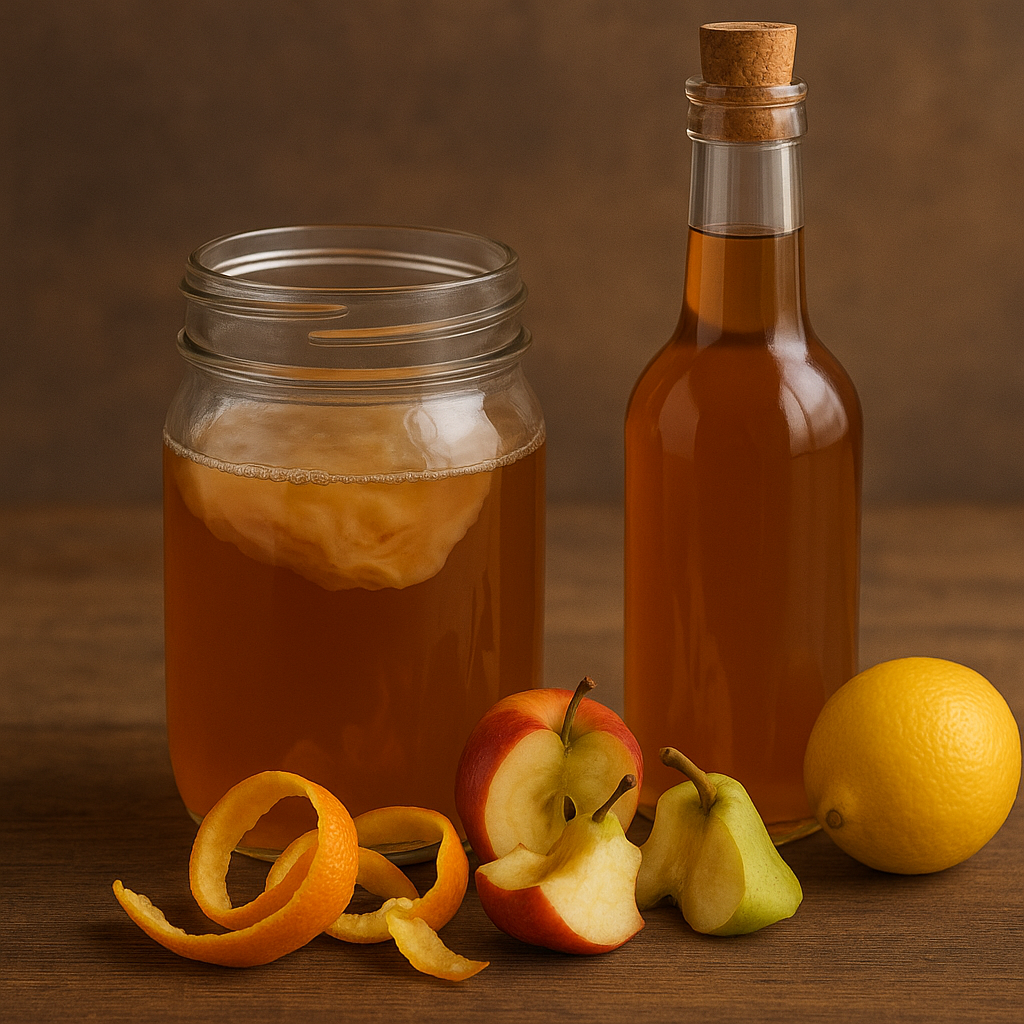
Do You Need a Vinegar “Mother” to Make Homemade Vinegar?
Part of the Fermentation & Preserving Guides hub.
If you’ve ever searched for homemade vinegar recipes, you’ve probably seen photos of a strange jelly-like disc floating in the jar. That’s the vinegar “mother”. Some people treat it like magic; others are quietly horrified by it. So what is it, and do you actually need one to make good vinegar at home?
Quick answer
No, you don’t need a big, dramatic vinegar “mother” to start every batch. What you do need are healthy acetic acid bacteria, the right starting liquid, oxygen, and enough time. A mother is simply a visible clump of those bacteria and supporting material. It’s useful, but not mystical – and it will often grow by itself once conditions are right.
What this article does (and doesn’t) cover
This article explains what a vinegar mother is, how it behaves, and how to look after it. It doesn’t give full recipes, ratios or timings – those live in the book, along with troubleshooting for slow or odd-smelling batches.
1. What exactly is a vinegar “mother”?
A vinegar mother is a rubbery, jelly-like mass that forms on or near the surface of active vinegar. It’s made of cellulose produced by acetic acid bacteria plus the bacteria themselves.
In plain English: it’s a physical “home” for the microbes that turn alcohol into vinegar.
2. Can you make vinegar without a visible mother?
Yes. The key workers are the acetic acid bacteria – not the sheet of material you happen to see.
You can make vinegar by:
- Adding live, unpasteurised vinegar as a starter to your alcohol or sugar base
- Allowing the bacteria to multiply in your jar
- Giving them access to oxygen and time to convert alcohol into acid
A mother often appears later once the bacteria are established. Some batches form thin, delicate mothers; others make thick ones; some remain mostly cloudy with only small fragments. All can be perfectly usable.
3. Why people like using a mother
A healthy mother can be helpful because it:
- Shows that the right microbes are present and active
- Can be moved into a fresh batch as a strong starter
- Gives a visual cue that your vinegar is alive rather than heavily processed
4. Looking after a vinegar mother
If you do have a mother, basic care is simple:
- Keep it in an acidic environment – don’t leave it sitting in plain water
- Give it access to air (acetic acid bacteria are aerobic)
- Avoid very high temperatures that might kill the microbes
If a mother dries out, goes black, grows obvious mould or smells rotten rather than vinegary, discard it and restart with a reliable live vinegar starter.
5. Common myths about vinegar mothers
- “You can’t make vinegar without one.” – You can. The bacteria can be present in the liquid without forming a big, obvious mat.
- “The thicker the mother, the better the vinegar.” – Thickness mainly reflects how it formed and how long it has been growing, not automatic quality.
- “Any strange growth must be a mother.” – Not always. Fuzzy, brightly coloured or dry/crusty growths are more likely to be mould and need action.
6. When to keep, when to discard
Discard a mother (and sometimes the batch) if you see:
- Fuzzy, hairy, powdery or strongly coloured growth
- Rotten, musty or otherwise off odours rather than clean sharpness
- Visible mould patches on jar walls above the liquid
In the book I show normal vs concerning appearances so you’re not guessing.
Want full, step-by-step vinegar methods?
My book Homemade Vinegar – A Beginner’s Guide covers:
- Starting vinegar from cider, wine and fruit scraps
- How to use live vinegar (or a mother) as a starter
- Looking after a mother culture long term
- How to tell when a batch is ready and how strong it is
- Troubleshooting cloudy, slow or strange-smelling batches
Thinking about starting your first vinegar?
If you like the idea of turning leftovers into something useful – and you want to avoid guesswork – the book gives a clear, structured approach with UK ingredients and measurements.