
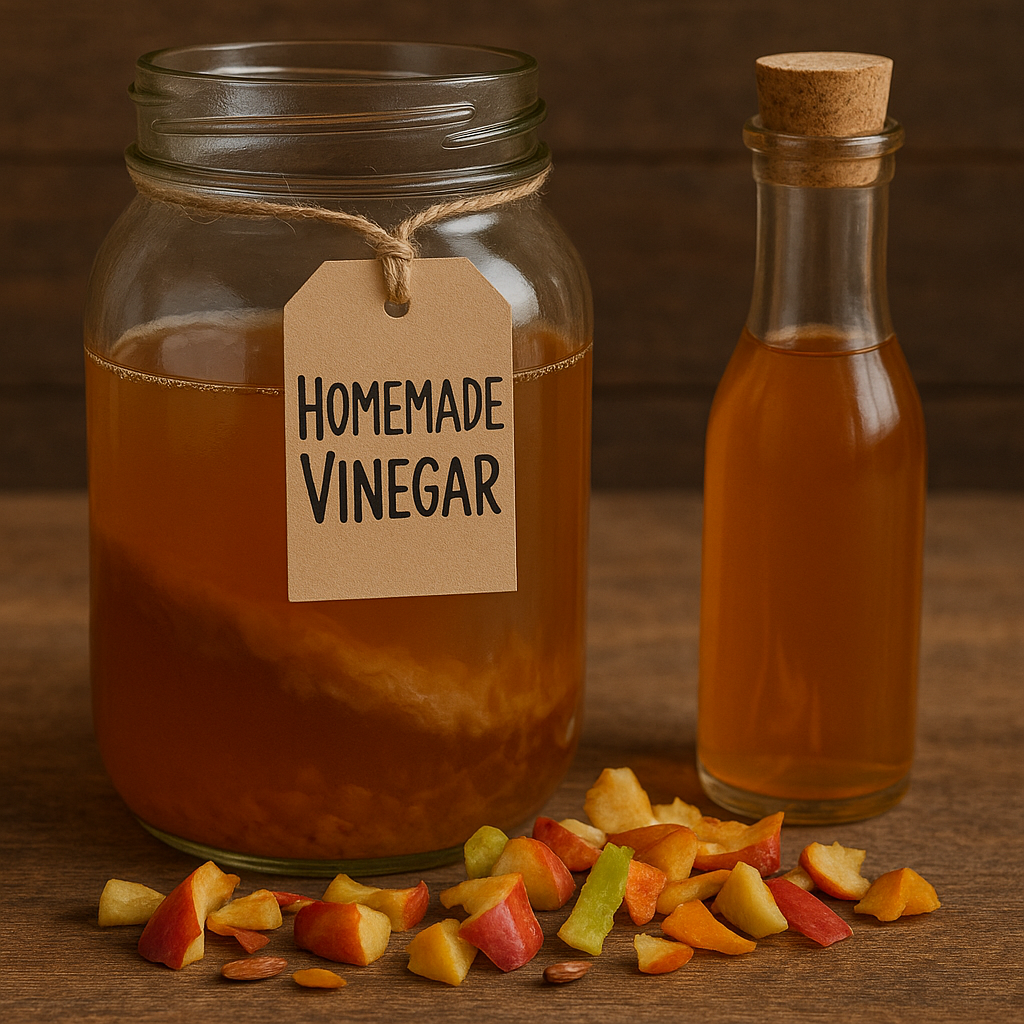
Why Your Homemade Vinegar Tastes Better Than Shop-Bought
If you’ve ever made a successful batch of homemade vinegar, you’ll know the difference immediately. It’s not just “sharp” – it’s rounded, fruity and surprisingly complex. There are good reasons for that, and they have nothing to do with fancy equipment.
Quick Answer
Homemade vinegar often tastes better than shop-bought because it’s usually fermented more slowly, from real wine, cider or fruit, and it isn’t stripped, filtered and standardised in the same way. You keep more natural aroma compounds, can choose your own base ingredients, and control how strong and mature it becomes. My book Homemade Vinegar – A Beginner’s Guide gives you the full step-by-step method; this article explains why the flavour difference is so noticeable.
What this article does (and doesn’t) cover
This isn’t a recipe. You won’t find exact quantities or timings here. Instead, you’ll learn why homemade vinegar can taste better, so you can decide whether it’s worth learning the full process properly.
1. You choose the starting flavour
Most supermarket vinegar is made to be consistent and cheap. At home, you can start with:
- Cider or apple juice
- Leftover wine or sparkling wine
- Fruit scraps from jam and preserving
The better and more interesting your starting liquid, the better and more interesting the vinegar. You’re not limited to “white” or “malt”.
2. Slow fermentation builds complexity
Vinegar is made when acetic acid bacteria convert alcohol into acetic acid. When this happens slowly and under good conditions, they also create other flavour compounds that give your vinegar real character.
In a home batch, you’ll often get:
- Softer, less harsh acidity
- More fruit aroma from the original wine, cider or juice
- A sense that the flavour “spreads” rather than just stabbing you with sharpness
3. Less stripped-out, more real character
Commercial vinegar often goes through filtration and processing to make it look the same in every bottle, all year round. That can be useful for the factory and supermarket shelf, but it can flatten nuance.
With homemade vinegar you can choose to:
- Keep a little of the “mother” in the bottle for live character
- Leave some natural cloudiness if you prefer
- Let the vinegar mature in the cupboard for extra depth
4. You control the strength and style
Shop-bought vinegar tends to sit around a standard acidity so labels, recipes and safety guidance are easy. At home you can:
- Make a punchier vinegar for chutneys and pickles
- Keep a gentler one for salad dressings
- Infuse herbs, spices or fruit once the vinegar is ready
It means your cupboard can hold several vinegars that each have a clear job, instead of one catch-all bottle for everything.
5. Freshness matters more than we think
Some bottles sit on shelves or in cupboards for a long time. While vinegar is naturally long-lived, aroma compounds can still fade. When you bottle your own vinegar and start using it within a sensible time, those fresher notes are still there.
Homemade vs shop-bought: when each makes sense
Supermarket vinegar isn’t “bad”. It’s cheap, predictable and handy for:
- Quick pickles
- Cleaning jobs (with the right type)
- Recipes where vinegar is just one small background ingredient
Homemade vinegar shines when:
- You drizzle it on salads or roasted veg
- You want a stand-out dressing or dipping sauce
- You enjoy experimenting with different fruits, juices and wines
Want to learn the full method safely?
My book Homemade Vinegar – A Beginner’s Guide covers:
- Fruit scrap vinegars (apple and beyond)
- Wine and cider vinegar at home
- Looking after the vinegar “mother”
- How to judge when a batch is ready
- What to do when something looks or smells wrong
Ready to try homemade vinegar?
If you like the idea of turning leftovers into something special – and you want to avoid trial-and-error – the book gives you clear, step-by-step instructions using UK ingredients and measurements.