
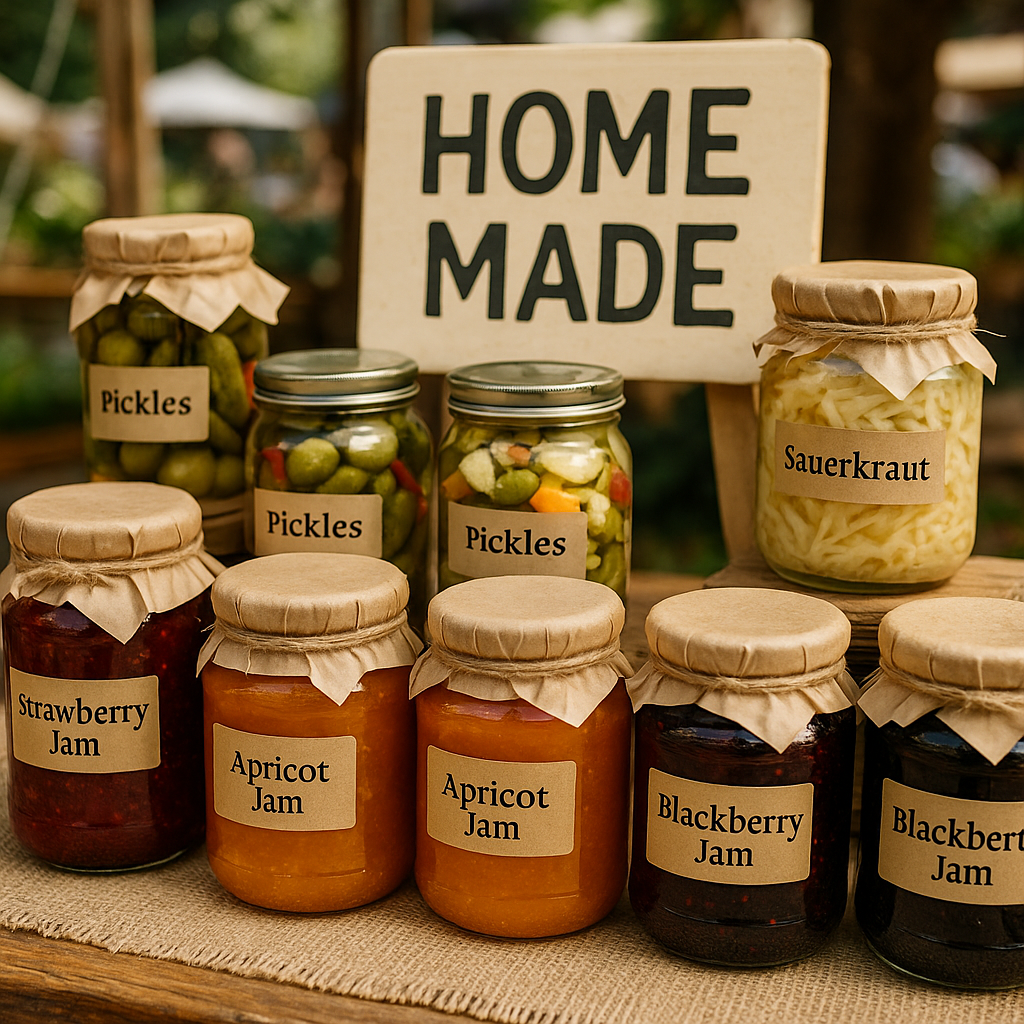
How to Legally Sell Homemade Jams, Pickles & Ferments in the UK
Part of the Fermentation & Preserving Guides hub.
Selling your jam, chutney or fermented veg can feel intimidating – especially when you start reading about “regulations”. The good news is that, in the UK, the basics are clear and achievable from a normal home kitchen.
Quick answer
To legally sell homemade preserves in the UK you typically need to: register as a food business with your local council, follow basic food hygiene rules, and label products correctly (name, ingredients, allergens, dates, your details). It’s more about good practice than having an industrial kitchen. The detailed “how” – forms, examples and checklists – lives in my book Preserving for Profit.
Feeling stuck on the legal side?
Most people can make tasty preserves – it’s the paperwork and rules that stop them ever selling. This article gives you the headline picture so you know what’s involved before you go deeper.
1. Registering your home kitchen
If you’re selling food, you must register with your local council as a food business. This usually applies even if you only sell:
- Occasionally at local markets or craft fairs
- From home, to friends-of-friends
- Through social media or a simple website
Registration is free. You normally fill in an online form, describe what you make, and the council may arrange a visit. They are not looking for a factory – they want to see a sensible, clean system.
2. Food hygiene: what councils actually care about
The UK approach is about risk. High-risk foods (like chilled meat dishes) need more controls than shelf-stable jams and chutneys, but you still need to show that you:
- Work in a clean, tidy kitchen
- Store ingredients and finished jars safely
- Prevent cross-contamination (especially allergens)
- Cool hot products properly before storage
You don’t need pages of complicated HACCP diagrams. You do need a simple, honest description of how you keep your products safe from start to finish.
3. Labelling basics
Every jar or bottle you sell should clearly show:
- Legal name of the food (what it actually is)
- Ingredients in descending order by weight
- Allergens highlighted (e.g. in bold)
- Net quantity (e.g. 227 g)
- Durability date – best before or use-by (as appropriate)
- Your name and address as the food business
4. Where you can sell your preserves
Once you’re registered and following hygiene and labelling rules, you can sell in lots of small-scale ways:
- Village and farmers markets
- Café and farm shop shelves (by agreement)
- School fairs, charity events and pop-up stalls
- Direct from home or via local delivery
- Through social media and simple websites
Different venues may ask for proof of registration and basic insurance, but the core rules stay the same.
5. Common beginner mistakes
- Assuming “small scale” means the rules don’t apply
- Home-printed labels that miss key legal information
- No written explanation of how hazards are controlled
- Unclear pricing, weight and ingredients at market stalls
None of these are difficult to fix – you just need clear guidance and a simple checklist to follow.
Want to turn your jars into a reliable income stream?
That’s exactly why I wrote Preserving for Profit – How to Sell Your Homemade Jams, Pickles & Ferments in the UK. It expands on this article with:
- Step-by-step registration guidance
- Simple food hygiene documentation examples
- Label wording and layout examples
- Pricing and profit calculations
- Ideas for where and how to sell legally
Prefer Amazon? Buy on Amazon.
Get the full roadmap
If you want everything laid out in order – from first idea to first legal sale – this book will save you hours of guesswork and Googling.