
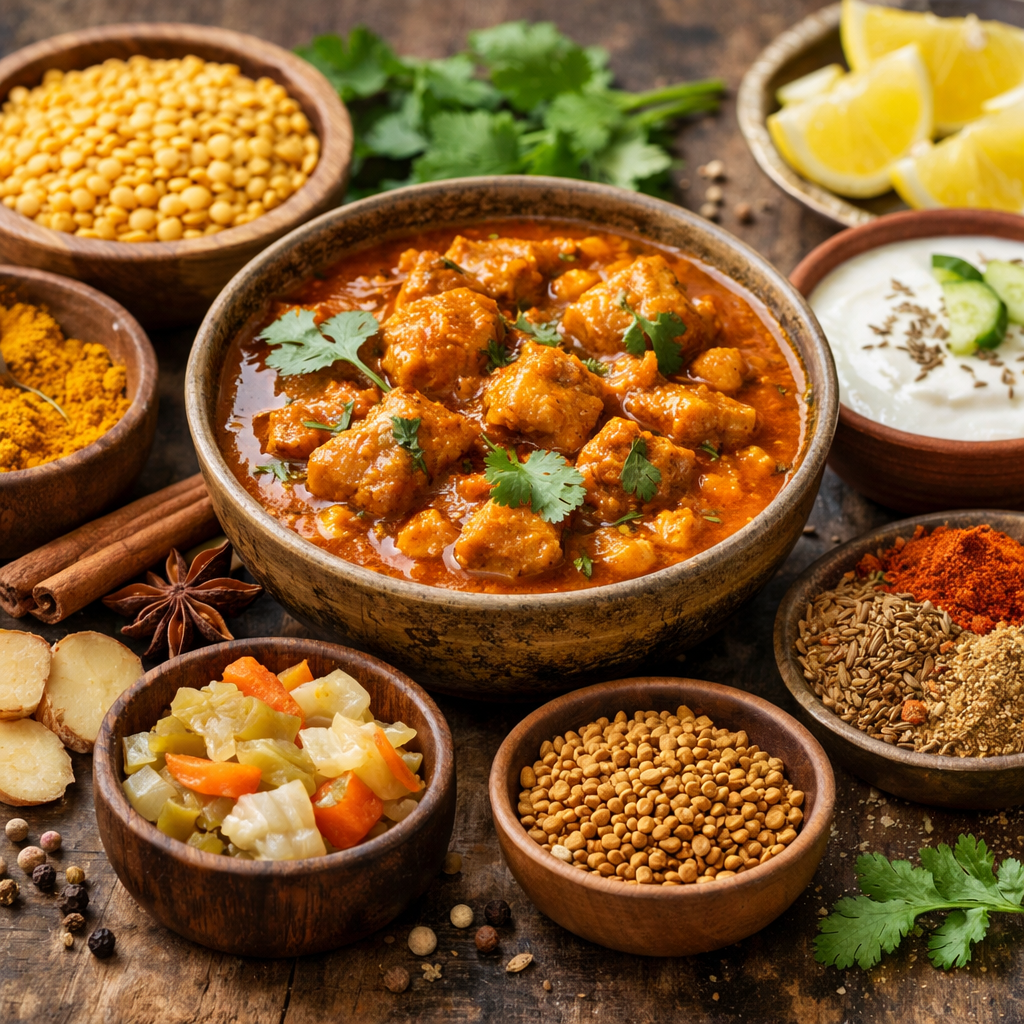
Is Indian Food Bad for Your Gut? (The Truth About Curry, Spices and Fermentation)
Some people assume there’s a contradiction: “How can you write about gut health and fermentation, but also write about Indian curry?” The idea is that curry must be bad for digestion. In reality, Indian food isn’t the problem. The problem is often modern takeaway-style curry — large portions, lots of oil, refined carbs, alcohol, and eating late. Traditional Indian cooking is one of the most gut-supportive food cultures on the planet because it combines fibre-rich legumes, spice polyphenols and fermented foods.
Quick Answer
Indian food is not bad for the gut. What upsets people is usually the modern takeaway pattern: big portions, high fat, refined carbs, alcohol and late-night eating. Traditional Indian cooking often supports gut health because it’s rich in legumes (prebiotic fibre), spices (polyphenols), and fermented foods (dahi/yoghurt, lassi, dosa/idli batters, pickles). If curry causes discomfort, it’s usually a tolerance/portion/oil issue — not “spices damaging your gut”.
Why curry gets blamed (when it’s usually not the spices)
Most people aren’t judging “Indian food” — they’re judging a specific situation: a heavy takeaway meal eaten quickly, often late at night. Then the discomfort gets pinned on “spice”.
| What people blame | What’s often actually happening |
|---|---|
| “Spicy curry upset my stomach” | High fat + overeating + late meal slows digestion |
| “Curry gives me indigestion” | Refined carbs + rich sauce + alcohol = reflux-friendly combo |
| “Curry bloats me” | Sudden fibre increase (lentils/beans) = temporary adaptation |
| “I can’t handle curry anymore” | Very hot chilli level > personal tolerance (irritation ≠ harm) |
Traditional Indian cooking is often gut-supportive (here’s why)
1) Legumes feed the microbiome
Dal, chickpeas and beans contain soluble fibre and resistant starch — the main fuel for beneficial gut bacteria. When the microbiome has the right fuel, it produces short-chain fatty acids that support the gut lining and healthy bowel function.
If you don’t eat many legumes now, you may get gas when you increase them. That’s common and usually temporary. The fix is gradual increases and good cooking (see below).
2) Spices are more than flavour
Indian spice blends don’t just taste good — they’re packed with plant compounds (polyphenols) that interact with gut microbes and digestion. Traditional cuisines used these spices alongside legumes for a reason: they make bean-heavy meals easier to digest and more enjoyable.
- Ginger can support stomach emptying (less “heavy” feeling).
- Cumin/coriander are commonly used to reduce gassiness.
- Turmeric is associated with anti-inflammatory activity.
- Fenugreek provides soluble fibre and can be microbiome-friendly.
- Asafoetida is traditionally used with legumes for a reason.
3) Fermented foods already exist in Indian cuisine
Indian food and fermentation are not separate topics. Many Indian staples are naturally fermented or traditionally cultured:
- Dahi (yoghurt) and lassi
- Dosa and idli batters (fermented)
- Traditional pickles (achar) (methods vary — some are oil/salt ferments, some are acidified)
When curry genuinely can be a problem
There are cases where people should be cautious:
- Reflux/GERD: very fatty meals + chilli + late eating can trigger symptoms.
- IBS: onion/garlic (high FODMAP) can be an issue for some people.
- Very high chilli heat: can irritate and cause pain/loose stools in sensitive people.
This still doesn’t mean “Indian food is bad”. It means you may need smarter choices: lower oil, milder heat, smaller portion, earlier meal, or modified aromatics.
How to make curry more gut-friendly (without losing flavour)
- Control the oil: restaurant curries often use more oil than home cooks realise. Reduce it and you’ll often feel better after the meal.
- Watch portion size: most “curry problems” are meal-size problems.
- Build fibre gradually: if you’re adding dal/beans, ramp up over 2–3 weeks.
- Cook legumes properly: soak where appropriate, cook until genuinely soft, and don’t undercook.
- Use digestive spice logic: cumin, coriander, ginger and asafoetida are your friends.
- Balance with fermented/cultured sides: yoghurt raita, lassi, or a small portion of fermented veg can fit well.
- Finish with acid, not heaviness: lemon/tamarind lifts flavour without extra fat.
So… is Indian food bad for your gut?
No — not inherently. In many traditional forms, it can be strongly gut-supportive because it combines legumes, spices and fermented foods. What tends to cause trouble is the modern takeaway pattern: rich, oily, oversized portions eaten late (often with alcohol) and followed by reflux or heaviness.
Want gut-friendly flavour without fads?
My books focus on practical systems: how to get big flavour from Indian cooking without relying on heaviness, and how to ferment safely with clear, conservative rules.
Free gut-friendly download
If you want simple, safer rules for fermentation (and less guesswork), grab the free download:
Clear decisions. Practical steps. UK measurements.Summary
Indian food isn’t bad for the gut. The discomfort many people associate with “curry” is usually driven by takeaway-style patterns: large portions, lots of oil, refined carbs, late eating and alcohol. Traditional Indian cooking often supports the gut because it’s rich in legumes (prebiotic fibre), spices (polyphenols) and fermented foods (yoghurt, lassi, fermented batters, traditional pickles). If curry causes issues, adjust heat, oil, portion size and fibre ramp-up — not the entire cuisine.