
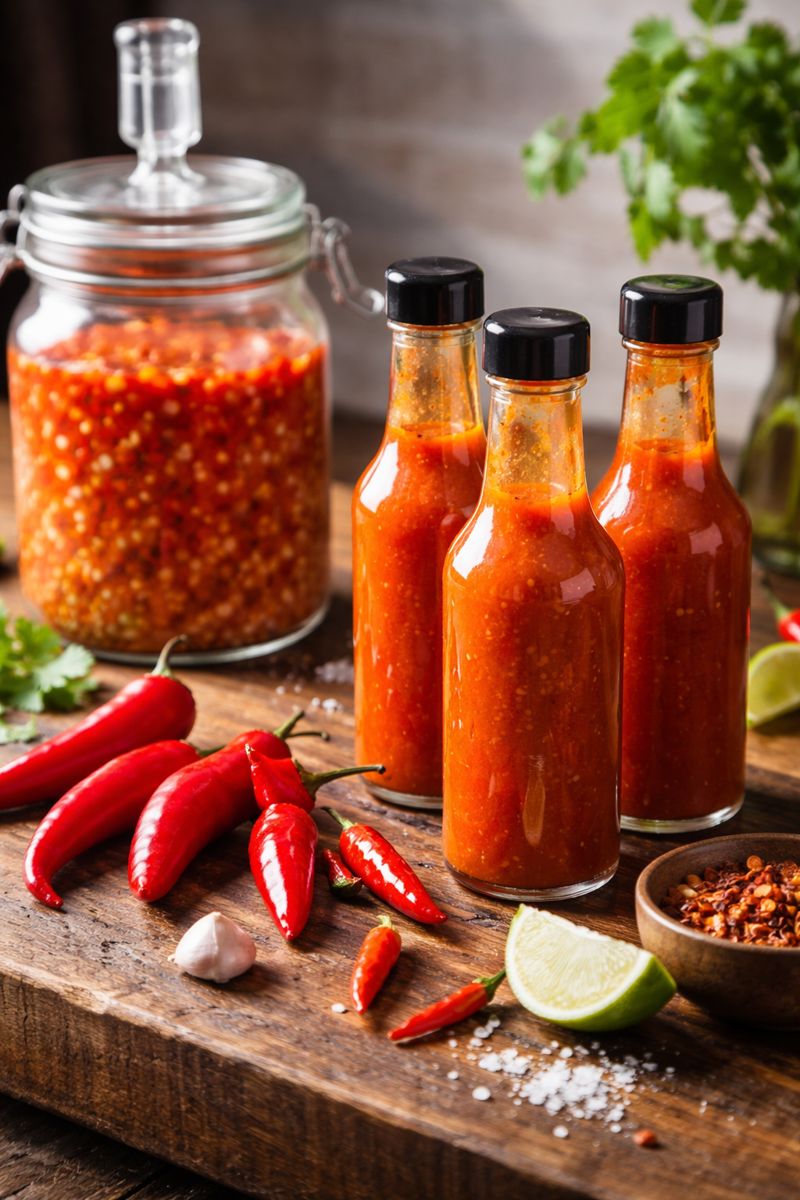
Why Fermented Hot Sauce Tastes Better Than Vinegar Sauces (Science Explained)
A lot of hot sauces are basically chilli + vinegar + salt (sometimes with sugar and thickener). They can be sharp and enjoyable, but they often taste one-dimensional. Fermented hot sauce tastes different because the acidity isn’t just “added” — it’s created. During lactic fermentation, microbes convert sugars into lactic acid and a whole set of flavour compounds that add depth, aroma and savoury complexity. That’s why fermented sauces often taste rounder, richer and more “alive”.
Quick Answer
Fermented hot sauce often tastes better than vinegar sauce because fermentation creates lactic acid (softer, rounder acidity than vinegar), boosts aroma, and builds savoury depth through natural fermentation by-products. Vinegar sauces can be clean and sharp, but they’re usually limited to the flavour of the raw ingredients plus vinegar. Fermentation changes the ingredients themselves — which is why it tastes more complex.
1) Lactic acid tastes different from vinegar acid
Vinegar is acetic acid. Fermentation mainly produces lactic acid (plus smaller amounts of other acids). In practical terms, lactic acidity tends to taste smoother and less “pointy” than straight vinegar. That’s one reason fermented hot sauce can feel rounded rather than harsh.
2) Fermentation creates extra flavour compounds (not just sourness)
Fermentation doesn’t only change pH. It changes flavour. As chillies and veg ferment, you get new aroma compounds and “background” flavours that weren’t present on day one. That’s the “depth” people struggle to recreate with a quick vinegar blend.
3) It boosts savoury (umami-like) depth
Many fermented chilli blends develop a savoury quality that makes the sauce taste fuller even when it’s not sweet or oily. This is part of why fermented sauces can taste great with simple foods (eggs, chips, grilled chicken) without needing lots of extras.
4) Fermentation integrates flavours instead of stacking them
Vinegar sauces often taste like separate layers: chilli heat, then vinegar hit, then salt. Fermented sauces tend to taste more integrated because time and microbial activity knit the flavours together. That’s why fermented sauces often feel more balanced even at similar salt levels.
5) Vinegar sauces still have a place (and sometimes they’re better)
Fermentation isn’t “always best”. Vinegar sauces can be cleaner, brighter and more predictable. If you want a sharp, immediate hit (or you need to make sauce quickly), vinegar-style sauces make sense.
Quick comparison: Fermented vs Vinegar hot sauce
| Aspect | Fermented hot sauce | Vinegar hot sauce |
|---|---|---|
| Acidity | Created (mainly lactic) | Added (acetic) |
| Flavour depth | Develops over time | Depends on raw ingredients |
| Balance | Often rounder | Often sharper |
| Speed | Days/weeks | Minutes/hours |
| Skill | Needs basic fermentation control | Needs recipe balance |
How to get fermented hot sauce flavour right (simple rules)
- Use enough salt: measure it (don’t guess). Salt controls the ferment and improves flavour.
- Keep chillies submerged: oxygen exposure is where people create problems.
- Ferment long enough: “tastes flat” often means “too young”. Give it time.
- Blend and balance: after fermentation, adjust with small amounts of brine, salt, and (if needed) a touch of vinegar for brightness — not as the main acid.
- Finish properly: strain for a thinner sauce, or keep the pulp for body. Don’t over-thin and wash out flavour.
Want fermented sauces that are safe and taste incredible?
My books cover the full method step-by-step: salt control, fermentation timelines, blending, thickness, shelf life, and flavour profiles from mild to extreme.
Learn the method (not just a recipe)
If you want repeatable fermented hot sauce results — safe, consistent, and genuinely better than vinegar blends — start here:
Plain English, practical steps, UK-friendly ingredients.Summary
Fermented hot sauce often tastes better than vinegar sauce because fermentation creates a smoother acidity (mainly lactic acid) and develops extra flavour compounds that add aroma and savoury depth. Vinegar sauces can be bright and convenient, but they’re usually limited to the raw ingredients plus vinegar. If you want the fuller, rounder flavour people associate with “proper” hot sauce, fermentation is the route — as long as you control salt, keep everything submerged, and let time do its job.