
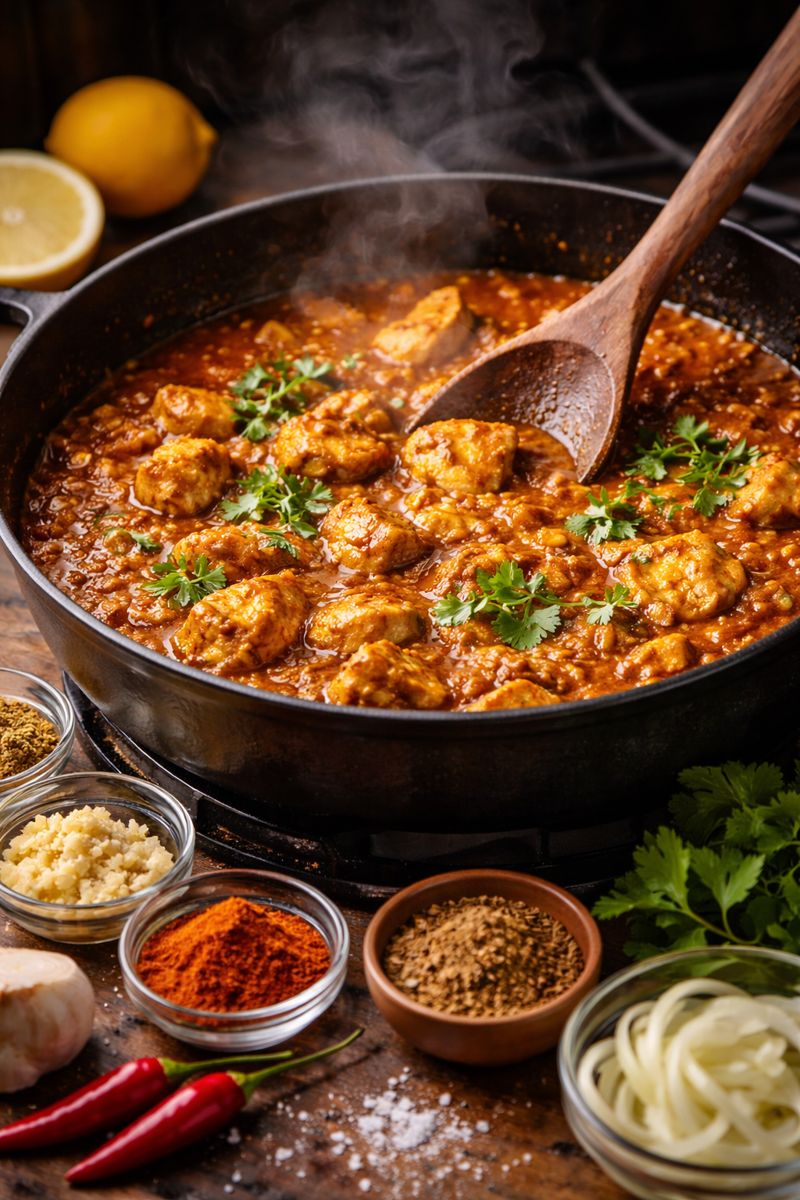
Why Homemade Indian Curry Takes So Long (And How Restaurants Cook So Fast)
If you’ve ever cooked an Indian curry at home and wondered how it can possibly take so long, you’re not imagining it. Most home methods build everything from scratch in one go: chopping, frying onions for ages, cooking out spices, then simmering forever to “develop flavour”. Restaurants don’t do it that way. They cook fast because the flavour base is prepared in advance and the curry is built in stages with short bursts of higher heat and a proper finishing step.
Quick Answer
Homemade curry takes a long time because you’re doing restaurant prep during dinner: slow onion base, repeated spice cooking, and long simmering to reduce. Restaurants cook fast by preparing a base sauce and core ingredients ahead of time, then building each curry in a hot pan with staged cooking (fry aromatics → fry spices/paste → add base sauce → reduce → finish). You can copy the same system at home and get takeaway-style results in 20–30 minutes once your base is ready.
1) At home you do everything from scratch, every time
The biggest time sink isn’t the recipe. It’s the repeated tasks: chopping onions, garlic, ginger, measuring spices, and cooking an onion base long enough for sweetness. That’s fine occasionally. It’s not how fast curry is produced in a takeaway.
2) You’re trying to get sweetness from onions during the main cook
Many home recipes start with “fry onions for 20–40 minutes”. That can be delicious, but it locks you into long cook times. In BIR-style cooking, the sweetness and body come from a prepared base sauce (and a consistent method), not a one-off caramelisation session.
3) Your heat is too gentle, so nothing concentrates quickly
Restaurants use wide pans and strong burners. Reduction happens fast. At home, curry is often cooked in a deep pot on low heat, which steams ingredients rather than frying them. The result is slower cooking and a “stew” texture rather than a finished curry sauce.
- Fix: use a wide pan when possible and cook in stages at medium-high heat.
- Clue: if the sauce stays watery, you’re not reducing enough or your heat is too low.
4) Restaurants use a system: base sauce + staged cooking + finishing
This is the part most people miss. A takeaway doesn’t cook one curry like a “special project”. It runs a repeatable workflow. That’s why it’s fast and consistent.
The basic restaurant workflow (simplified)
- Prep once: make base sauce (and keep it in the fridge/freezer).
- Start hot: fry aromatics/spices/paste properly in oil.
- Add base sauce: build the curry quickly with measured ladles rather than long simmering.
- Reduce: cook at higher heat until the sauce clings.
- Finish: aroma (garam masala), fenugreek, a touch of acid, fresh coriander, etc.
5) The “base sauce” is what makes fast curry possible
Base sauce isn’t a shortcut. It’s batch-prep. It contains the cooked onion/veg foundation, spices and body that would otherwise take ages during the main cook. Once it’s made, a curry becomes assembly + finishing instead of a long simmer.
Quick comparison: Home method vs Restaurant method
| Stage | Common home approach | Restaurant approach |
|---|---|---|
| Onion base | Cook from raw during dinner | Base sauce prepared earlier |
| Heat | Gentle simmer in a deep pot | Hot pan + reduction |
| Timing | 60–120 minutes | 8–15 minutes per curry (with base ready) |
| Finish | Serve when hot | Finish for aroma, balance, gloss |
How to make your curry faster at home (without losing flavour)
- Batch the base: make base sauce once a week (or freeze portions).
- Pre-measure spice mixes: keep a few labelled spice blends ready.
- Cook in a wide pan: reduction happens quicker.
- Use staged cooking: fry → build → reduce → finish (don’t skip steps).
- Stop over-simmering: long simmering often dulls spices rather than improving them.
Want the full fast-curry system?
My curry books show the complete method step-by-step: base sauce, spice timing, pan workflow, and finishing—so you can cook takeaway-style curries quickly and consistently.
Get the exact base sauce + timings
If you want reliable 20–30 minute curry nights, start with the system (not random recipes):
UK ingredients, clear steps, repeatable results.Summary
Homemade curry feels slow because most methods try to build restaurant-level flavour during the main cook: long onion cooking, gentle heat, and long simmering to reduce. Restaurants cook fast because they use a system — base sauce prepared ahead, staged pan cooking, quick reduction, then finishing for aroma and balance. Copy that workflow and you’ll cut time dramatically without losing flavour.