
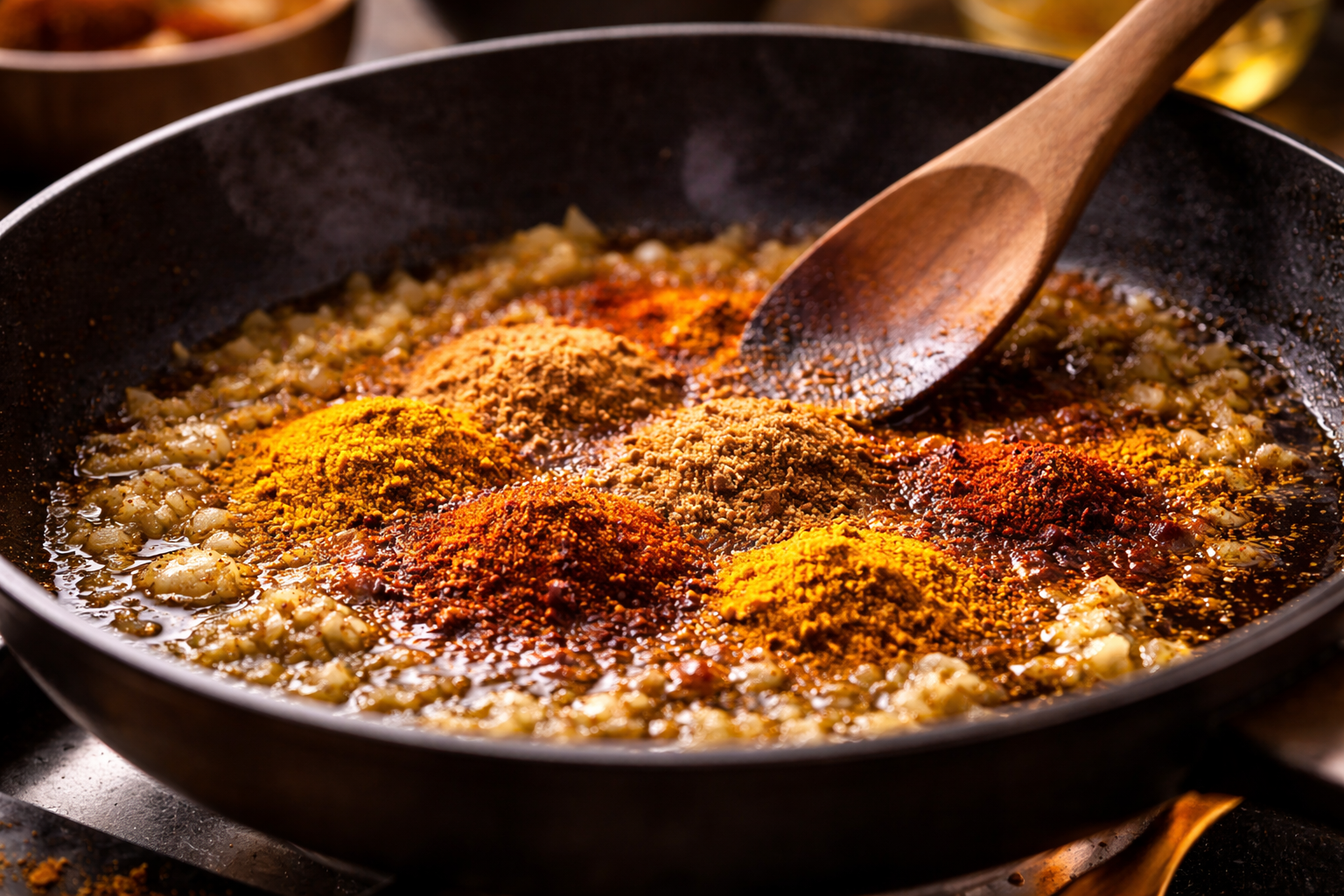
Why Spices Must Be Fried in Oil for Proper Curry Flavour
One of the biggest reasons homemade curry tastes flat is that the spices are not fried properly in oil. Many people throw ground spices straight into liquid and hope for the best. The result is often raw, dusty or weak. Proper curry flavour is built differently. Oil is not just there to stop sticking — it helps unlock aroma, deepen flavour and remove the harsh raw edge from the spices.
Quick Answer
Spices must be fried in oil because many of their key flavour compounds release and spread far better in fat than in water. Brief frying also removes rawness, rounds off harsh notes and helps build the fuller, deeper flavour associated with good curry. If you skip this step or do it badly, the curry often tastes dull, powdery or unfinished.
1) Oil carries flavour better than water
A lot of spice compounds are fat-soluble, which means they dissolve and spread more effectively in oil than in water. When spices hit hot oil, their aroma opens up and moves through the dish much more efficiently.
If you add the same spices straight into a watery sauce, they can stay dull and separate. The flavour feels flatter because the compounds have not been developed and distributed properly.
2) Frying removes the raw taste of ground spices
Raw ground spices often taste harsh, chalky or slightly bitter if they are not cooked properly. Curry powder, cumin, coriander, paprika and turmeric all improve when they are briefly fried in oil.
This does not mean you should burn them. It means they need a short, controlled fry so the raw flavour cooks off and the spice becomes rounder and more integrated.
- Too little frying: curry tastes raw or powdery.
- Too much frying: spices turn bitter and burnt.
- Correct frying: deeper aroma and smoother flavour.
3) This is how curry builds flavour in layers
Good curry is not made by dumping everything in one pot and hoping time fixes it. Proper Indian cooking builds flavour in stages. Frying onions, garlic, ginger and spices in oil is one of the most important of those stages.
- Heat the oil properly.
- Cook onions or the base ingredients first if the recipe uses them.
- Add garlic, ginger or paste as needed.
- Add the ground spices and fry briefly.
- Then add tomato, stock, water or base sauce.
That sequence matters. It gives the spices direct contact with hot fat before the liquid goes in. Once the sauce is added, the spice flavour is already developed.
4) Why throwing spices into liquid often fails
This is where many home cooks go wrong. They add curry powder or mixed spices to a simmering sauce and stir. Technically the spices are in the curry, but they have not gone through the step that makes them taste good.
The result is often one or more of these problems:
- the curry tastes thin even when the ingredient list looks right
- the flavour seems muddy rather than deep
- the spices sit on the tongue like powder
- the sauce tastes “homemade” in the bad sense rather than restaurant-style
5) Why restaurant curries taste stronger
Curry houses understand this principle well. BIR-style cooking relies on oil, heat and quick frying to wake up spice flavour fast. That is one reason takeaway curries often taste fuller, smoother and more intense than home versions made with similar ingredients.
It is not always because restaurants have secret spices. Often they simply use the spices more effectively.
| Method | What happens to the spices | Likely result |
|---|---|---|
| Added straight to liquid | Limited blooming and poor flavour release | Flat or powdery curry |
| Briefly fried in oil | Aroma opens up and rawness cooks off | Deeper, fuller curry flavour |
| Over-fried or burnt | Spices scorch and turn bitter | Harsh, unpleasant taste |
6) How long should you fry spices?
Not long. This is where people either underdo it or ruin it. Ground spices usually need only a short frying time — often around 20 to 40 seconds once added to oil and mixed into onions, garlic, ginger or paste.
The exact time depends on the heat level, the amount of moisture in the pan and what else is already in there. You are looking for the point where the spices smell fragrant and cooked, not scorched.
- If the pan is too dry, the spices may catch and burn.
- If the pan is too wet, they may stew instead of fry.
- If needed, a small splash of water can control the heat after frying.
7) Whole spices and ground spices are not the same
Whole spices and ground spices behave differently. Whole spices such as cumin seeds, mustard seeds, cloves or cardamom are often added earlier to flavour the oil itself. Ground spices usually go in later and need a shorter frying time.
If you treat all spices the same, the results will be inconsistent. Whole spices can take more heat. Ground spices are far easier to burn.
8) This does not mean using huge amounts of oil
Some people misunderstand this and think the answer is to drown the curry in oil. That is not the point. The point is to use enough oil for proper frying and blooming. Too little oil can leave the spices dry and raw. Too much oil can leave the dish greasy.
Good curry needs enough fat for flavour development, not reckless amounts.
Want better curry flavour at home?
My books explain the small technique details that make the biggest difference — including frying spices properly, using base sauce correctly and building flavour in the right order.
Cook curry with proper flavour-building
No flat sauce, no raw spice taste — just methods that work in a real home kitchen.
See the BooksSummary
Spices must be fried in oil for proper curry flavour because oil helps release and carry their key flavour compounds, while brief frying removes rawness and deepens aroma. Add spices straight to liquid and the curry often tastes flat. Fry them properly and the whole dish tastes more rounded, more aromatic and far more like a real curry should.