
Why UK Bacon Is Different Abroad
If you’ve ever ordered bacon on holiday and thought, “This isn’t like home,” you’re not imagining things. UK bacon really is different—in the cut, the cure and how it cooks.
Quick Answer
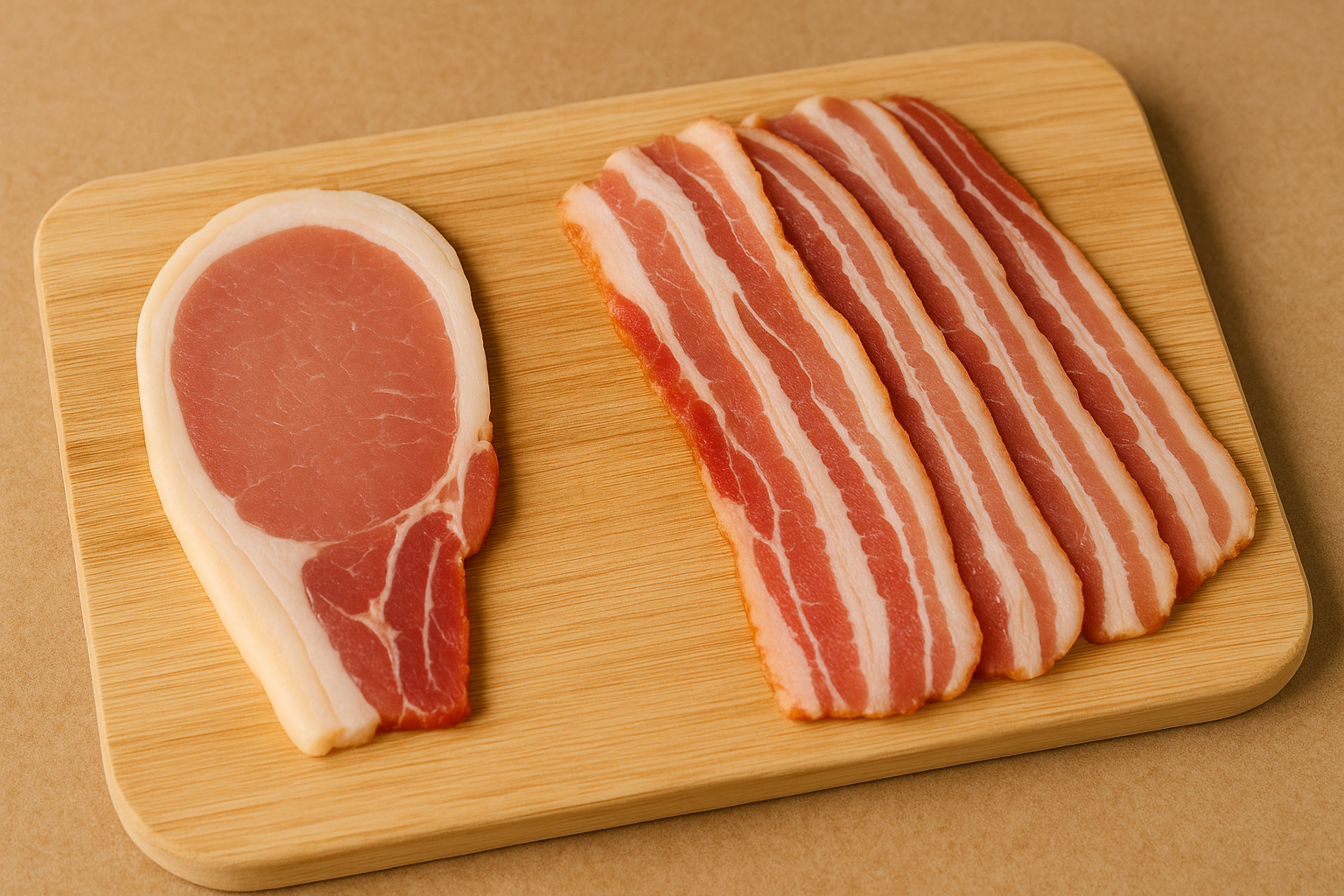
In the UK, bacon is usually made from the loin (back bacon), which gives a leaner rasher with a small fat cap. In many other countries, especially the United States, bacon is made from belly (streaky bacon), which is fattier and cooks up much crispier. On top of that, UK bacon is often dry cured with a rubbed-on cure, while a lot of overseas bacon is wet cured in brine. Different cut + different cure = a very different breakfast.
Free Fermentation Safety Checklist
If you’re fermenting or preserving at home, get my Fermentation Safety Checklist (PDF) to avoid the most common beginner mistakes with salt, time and temperature.
Get the Free ChecklistBack bacon vs streaky bacon
When people say “bacon” in the UK, they usually mean a rasher of back bacon:
- Back bacon (UK): cut from the loin, running along the back of the pig.
- Broad section of lean meat with a smaller strip of fat on the edge.
- More meaty, typically less greasy, and can be cooked soft or lightly crisped.
Order bacon in many other countries and you’ll more likely get streaky bacon:
- Streaky bacon (common abroad): cut from the belly.
- Distinct streaks of fat and lean running the length of the slice.
- Designed to cook crisp, with rendered fat and a punchier salty bite.
Different curing traditions
The curing method also changes flavour and texture.
Traditional UK approach (often):
- Dry cured: a measured mix of salt (and sometimes sugar/cure) is rubbed onto the meat.
- Kept chilled for a set number of days while moisture is drawn out.
- Result: firmer texture, more concentrated pork flavour, and typically less water in the pan.
Common mass-produced approach (often abroad, and also sometimes in the UK):
- Wet cured in brine, or brine is injected into the meat.
- Fast and consistent at large scale.
- Result: different juiciness, and sometimes more liquid released as it cooks.
Why it feels so different on holiday
- In the UK, a cooked breakfast usually features back bacon.
- In hotels abroad, you often see thin streaky strips cooked very crisp.
If you’re expecting a soft, meaty British rasher and you’re served crisp streaky strips, it’s going to feel “wrong” even if it’s good bacon for its style.
Fat, flavour and the pan
- Back bacon: less fat to render, more lean meat. Cooks quickly and can dry if overdone.
- Streaky bacon: more fat streaks that render out. Gives lots of crisp edges but much less “meaty bite”.
How to get UK-style back bacon at home
If you prefer UK back bacon, you can make it yourself:
- Start with a simple pork loin joint.
- Use a weight-based dry cure so the salt level is controlled and repeatable.
- Cure chilled for the right number of days, then rinse, dry, rest, and slice.
Homemade Back Bacon – The UK Dry-Cure Method
Step-by-step, weight-based methods for authentic UK-style back bacon, with a curing diary, slicing tips and troubleshooting.
Interested in other practical, science-backed kitchen projects?
My books cover bacon, pickling, fermentation, jam, hot sauce and more—using UK measurements, clear safety guidance and supermarket ingredients.
Summary
UK bacon feels different abroad because it is different: back bacon from the loin (often dry cured) versus streaky belly bacon (often wet cured and cooked very crisp). Once you understand the cut and the cure, holiday breakfasts make a lot more sense—and you’re in a much better position to make proper British back bacon at home.