
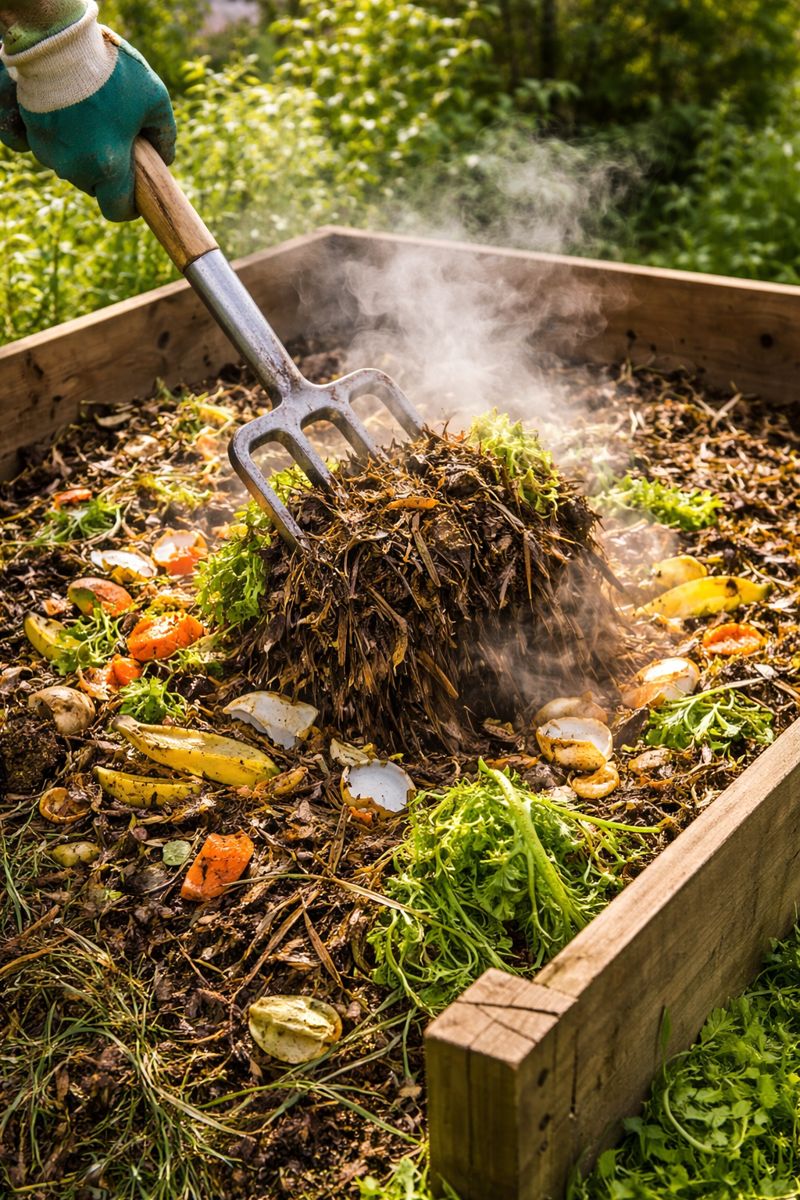
Why Your Compost Isn’t Heating Up (And What to Do)
A compost heap doesn’t have to get hot to produce compost, but heat is a useful signal that microbes are working fast. If your heap stays cold for weeks, it’s usually because one of the basics is missing: volume, oxygen, moisture, or nitrogen.
Quick Answer
Cold compost is usually caused by a pile that’s too small, too dry, too compacted, or too low in greens (nitrogen). Fix it by: building more volume, turning to add oxygen, aiming for “wrung-out sponge” moisture, and balancing greens with plenty of browns so the heap stays aerated.
1) The heap is too small to hold heat
Microbes generate heat, but small heaps lose it instantly. If you only add a little bit every day, you end up with a thin, slow pile. A bigger mass holds heat and breaks down faster.
2) It’s too dry (microbes can’t work properly)
If the heap looks dusty or straw-dry, activity stalls. Compost should feel like a damp, wrung-out sponge — moist, but not dripping.
3) It’s too compacted (no oxygen)
Compaction kills airflow. This is common when grass clippings or food waste are added in thick layers. Without oxygen, the heap slows down and can also turn smelly.
4) Not enough greens (nitrogen)
Leaves and cardboard are great, but they won’t heat on their own. A “brown-only” heap decomposes slowly. You need some greens: food scraps, fresh grass, or soft green plant waste.
Quick diagnostic table
| What you notice | Likely cause | What to do |
|---|---|---|
| Dry, crunchy heap | Too dry | Water lightly and mix; add greens |
| Dense, matted sections | Compaction | Turn; add browns + structure (twigs/woodchip) |
| Mostly leaves/cardboard | Low nitrogen | Add greens (food waste/grass) and mix |
| Tiny pile | Not enough volume | Build bigger deposits; insulate/cap with browns |
Fast restart method
- Turn the heap: break up matted and compacted layers.
- Add greens: a bucket of kitchen scraps or fresh grass (mixed through).
- Add browns: at least two buckets of shredded cardboard/dry leaves to keep it airy.
- Moisten if needed: damp like a wrung-out sponge, not soaked.
- Cap the top: a layer of browns keeps heat in and stops flies.
Want a full beginner system (without the smell, pests or guesswork)?
My book The Beginner’s Guide to Composting shows you exactly how to build, balance and maintain a compost setup that works in real UK homes — including troubleshooting, what to add, what to avoid, and how to get reliable, garden-ready compost.
Get compost that actually finishes
Heating is a sign you’re on track — but the real goal is finished, crumbly compost. Use the restart method and keep the balance steady.
UK context, clear steps, repeatable results.Summary
If your compost isn’t heating up, it’s almost always missing one of the basics: enough volume, oxygen, moisture, or nitrogen. Turn it, balance greens with browns, dampen to “wrung-out sponge” level, and build bigger deposits. That’s how you restart decomposition quickly.