
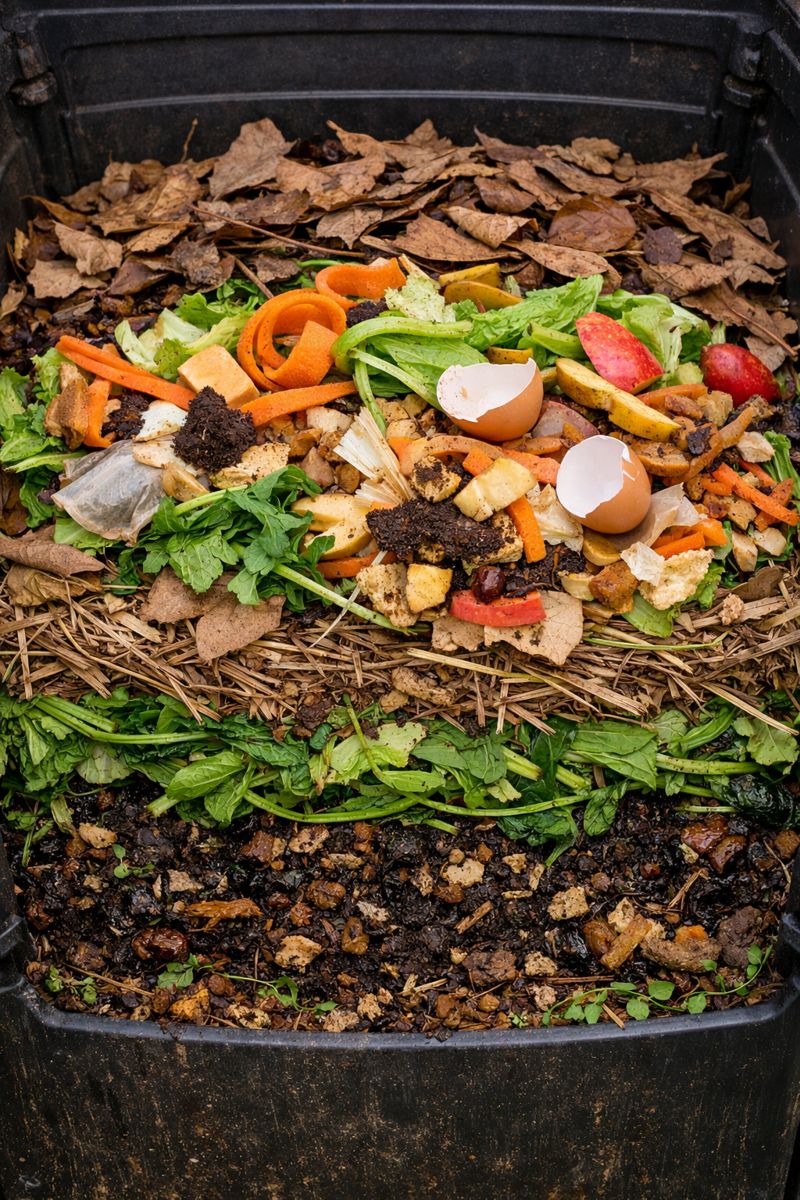
Why Your Compost Smells (And How to Fix It Fast)
A healthy compost heap shouldn’t stink. An earthy smell is normal. A strong smell — especially like rotten eggs, sewage, ammonia, or sour bin juice — is a warning sign that the heap has tipped into the wrong conditions. The good news is most compost smells have one main cause: not enough air. Fix the airflow, fix the smell.
Quick Answer
Smelly compost is usually anaerobic (decomposing without oxygen) because it’s too wet, too compacted, or contains too many “greens” (food scraps, grass clippings) without enough “browns” (dry leaves, cardboard, shredded paper). The fastest fix is: turn it, add dry browns, and aim for a damp “wrung-out sponge” moisture level. If it smells of ammonia, you’ve got too much nitrogen — add more browns immediately.
1) Bad smells usually mean the heap has gone anaerobic
Compost works best when microbes have oxygen. When oxygen can’t get in, anaerobic microbes take over — and they produce the sort of smells you’d expect from stagnant water and rotting waste.
2) The three main triggers: too wet, too compacted, too many greens
Most people accidentally create a sealed, soggy mass. Kitchen scraps and grass clippings are wet and break down quickly. If they’re packed in without structure, airflow disappears.
- Too wet: rain getting in, lots of food waste, no absorbent browns.
- Too compacted: everything pressed down, no chunky material, no turning.
- Too many greens: nitrogen-heavy inputs without balancing carbon.
3) Smell type tells you what’s wrong
You don’t need fancy kit. The smell is a diagnostic tool.
| Smell | Likely cause | Fast fix |
|---|---|---|
| Rotten eggs / sewage | Strong anaerobic conditions (too wet/compacted) | Turn hard + add lots of dry browns + keep rain out |
| Ammonia / sharp “urine” | Too much nitrogen (greens/grass), not enough carbon | Add browns immediately (leaves/cardboard), mix through |
| Sour / vinegar / silage | Wet, compacted, poor airflow (often lots of grass) | Break it up, add browns, add structure (twigs/woodchip) |
| Bin-juice / rancid | Waterlogged heap, poor drainage | Lift and aerate, add dry browns, improve drainage/base |
4) The fastest “rescue” method (do this today)
If your compost smells bad right now, don’t overthink it. Do a reset with air and carbon.
- Turn it properly: dig from the bottom and break up compacted wet clumps.
- Add dry browns: shredded cardboard, dry leaves, torn paper (avoid glossy), wood shavings/woodchip.
- Aim for “wrung-out sponge”: damp, not dripping. If liquid runs out, it’s too wet.
- Rebuild in layers: a layer of smelly material, then a thick layer of browns, repeat.
- Keep rain out: put a lid on, or cover the top with cardboard/tarpaulin.
5) What “browns” actually work in real UK gardens
People get stuck because they don’t have a ready carbon source. The solution is to stockpile dry browns like you stockpile bin liners — because you will always need them.
- Best: dry leaves, shredded cardboard, torn paper, woodchip, straw.
- Good: egg cartons, paper towel rolls, small twigs, shredded brown paper bags.
- Be careful: sawdust/shavings (fine particles can compact — mix lightly with chunky browns).
6) How to stop smells long-term (the boring stuff that actually works)
- Always cover food waste: bury it or cap with browns so it doesn’t sit exposed.
- Don’t dump grass in thick mats: mix it through with browns as you add it.
- Add structure: a few handfuls of twigs/woodchip stops compaction.
- Turn often enough: even a quick mix every 1–2 weeks helps.
- Keep rain off: waterlogging is one of the biggest UK compost problems.
Compost doesn’t need to stink to work
There’s a myth that composting is meant to be messy and smelly. It isn’t. A decent heap smells like soil and woodland — because that’s what you’re trying to create. If it stinks, it’s telling you one thing: fix the air/carbon/moisture balance.
Want a full beginner system (without the smell, pests or guesswork)?
My new book The Beginner’s Guide to Composting shows you exactly how to build, balance and maintain a compost setup that works in real UK homes — including troubleshooting, what to add, what to avoid, and how to get reliable, garden-ready compost.
Fix smells in one session
If your compost is currently sour, ammonia-heavy, or sewage-like, follow the rescue steps and then switch to a simple rule: always cover greens with browns.
Clear steps. Real materials. Reliable results.Summary
Smelly compost is almost always anaerobic: too wet, too compacted, or too many greens without enough browns. Fix it fast by turning for air, adding dry browns, and aiming for “wrung-out sponge” moisture. Prevent it by covering food waste with browns, mixing grass clippings, adding structure, and keeping rain out.