
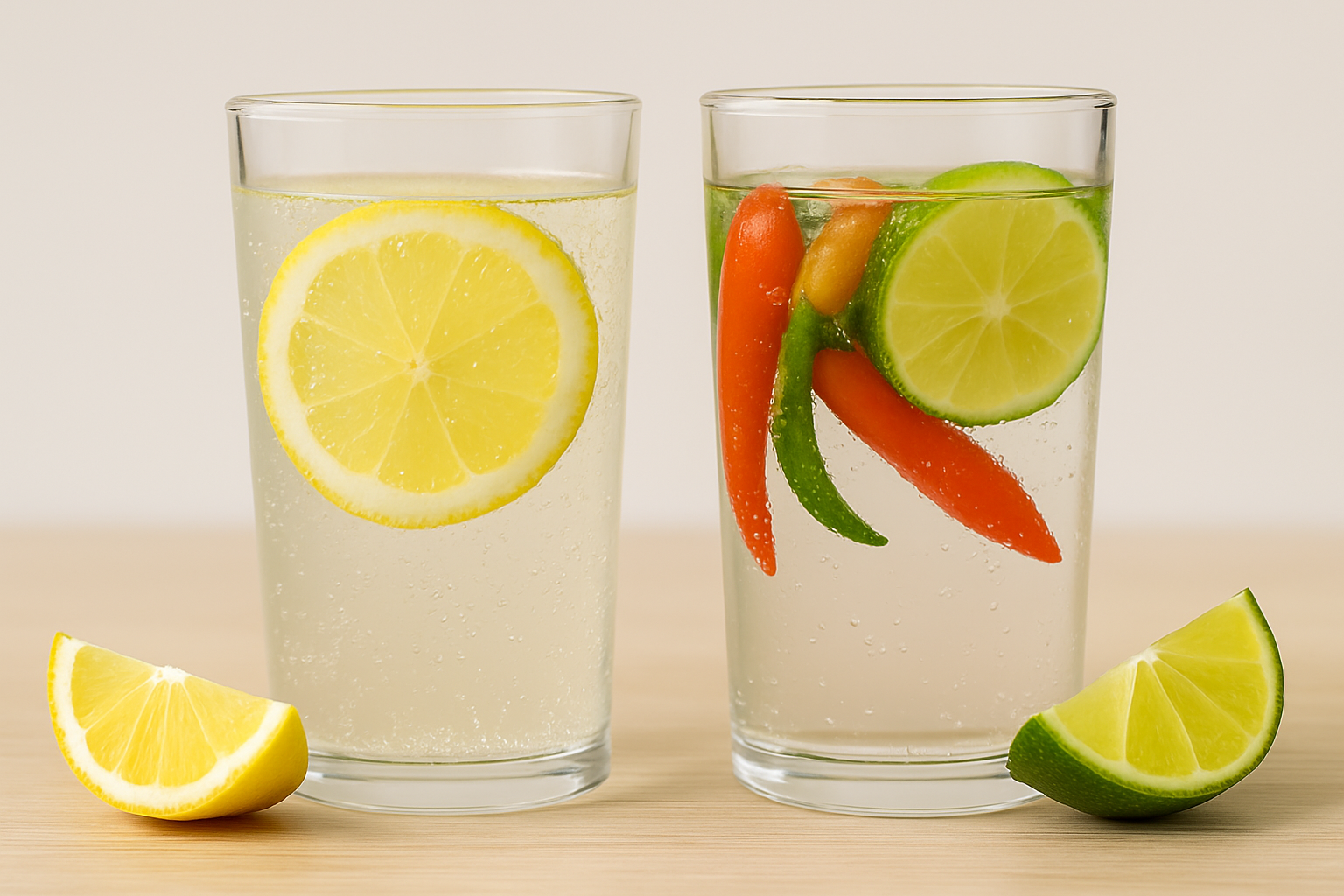
Water Kefir: A Crisp Summer Guide
Lightly sweet, gently fizzy, and endlessly customisable—water kefir is the perfect probiotic refresher for warm days. Use this quick-start guide to understand the basics of fizz, flavour and grain care.
Quick Answer
Water kefir is made by fermenting sugar water with water kefir grains (a mix of bacteria and yeasts). In the first ferment, the grains turn sugar into acids, CO₂ and flavour in about 24–48 hours. In the second ferment, you bottle the strained liquid with fruit or juice to build fizz. Success comes down to three things: reasonable sugar levels, enough minerals for the grains and good temperature control.
Free Fermentation Safety Checklist
If you’re fermenting veg or drinks at home, get my Fermentation Safety Checklist (PDF) to avoid common mistakes with brine, temperature and surface growth.
Get the Free ChecklistWhy water kefir?
Water kefir is:
- Caffeine-free: unlike kombucha, there’s no tea involved.
- Fast: usually ready to drink within 24–48 hours plus a short second ferment.
- Flexible: you can keep it mild and lightly sweet or let it go drier and tangier.
The grains (a symbiotic culture of bacteria and yeast) turn sugar water plus minerals into bubbles, organic acids and delicate flavour—if you give them the conditions they like.
Base pattern for 1 litre
This is a simple pattern for understanding the process. For more exact ratios, variations and troubleshooting charts, the book goes into much more detail.
- Mix about 1 litre of dechlorinated water with a modest amount of white sugar (often a few tablespoons). Add a small pinch of molasses or a dried fig for minerals.
- Add a handful of water kefir grains. Cover loosely (cloth or loose lid). Ferment at roughly 20–26°C for around 24–48 hours.
- Strain off the liquid. That liquid becomes your drink and base for a second ferment. Move the grains into fresh sugar water to start the next batch.
Second fermentation (flavour & fizz)
The second ferment is where you dial in flavour and bubbles:
- Transfer strained water kefir to strong bottles (swing-tops are ideal).
- Add a small amount of flavouring: pieces of fruit, fruit juice, ginger, herbs or citrus peel.
- Seal and leave at room temperature for another 24–48 hours.
- Chill before opening, and crack bottles slowly over a sink in case they’re lively.
Flavour ideas:
- Lemon & ginger: sharp and warming.
- Strawberry & lime: soft, fruity fizz.
- Pineapple & mint: bright and summery.
Temperature, minerals and grain health
Water kefir grains are generally forgiving, but they do have preferences:
- Temperature: they usually like the low–mid 20s °C. Cooler kitchens slow things down; very warm conditions can race fermentation and stress the grains.
- Minerals: a little molasses, dried fig or mineral-rich sugar keeps grains plump. Too much can make flavours muddy.
- Water quality: heavy chlorine or chloramine can damage grains. Use filtered, boiled-and-cooled, or rested tap water if needed.
Care & troubleshooting
- Grains shrinking or going thin? Check water quality, make sure they’re getting minerals, and avoid very long ferments that leave them with no sugar.
- Flat, lifeless drink? Try a slightly longer second ferment in well-sealed bottles, keep them at a warm-ish room temperature, and ensure there’s still a little sugar for the microbes to eat.
- Too sweet? Extend the first ferment towards the top of the usual range (for example, nearer 48 hours at moderate room temperature).
- Off aroma or odd flavours? Reset with a simple batch (plain sugar water plus a little mineral support), shorten ferment times and avoid over-flavouring until grains are happy again.
Want the full, step-by-step drinks playbook?
My fermented drinks book covers water kefir, milk kefir, kombucha, ginger beer and more—with precise ratios, carbonation tricks, fruiting charts and detailed troubleshooting.
Ready to make your first batch?
For exact ratios, timings and fizz-control methods—plus printable charts and recipes—see the full drinks guide:
Summary
Water kefir is simple once you understand the pattern: sugar + minerals + grains + time. Keep the grains comfortable with decent water and temperature, give them a sensible amount of sugar to work on and use a short second ferment in strong bottles to build fizz. From there, you can experiment with fruits and herbs all summer—using a reliable method rather than guesswork.